In a nutshell
- If you want the classic, book the Kawarau Bridge Bungy: from US$188, 1 - 2.5 hours, limited to 6 participants.[1]
- Tandem jumps sit with the Kawarau Swing, sold as solo, tandem or triple, from US$141.[2]
- The bridge sits 43 metres above the water, and the world's first commercial bungy jump launched from it on 12 April 1988.[3]
- From Queenstown it is around a 25-minute drive (23 km) via State Highway 6.[4]
- At AJ Hackett the minimum age is 10, the minimum weight 35kg and the maximum weight 235kg.[5]
- Top choice Kawarau Bridge Bungy from US$188 Duration1 - 2.5 hours[1]Group sizeLimited to 6 participants[1]Rating4.90 from 195 reviews[1]CancellationCancel up to 24 hours ahead[1] Check availability
- Nevis Bungy from US$232 Duration4 hours[6]Group sizeLimited to 6 participants[6]Rating4.96 from 100 reviews[6]CancellationCancel up to 24 hours ahead[6] See this tour
- Nevis Swing from US$191 Duration4 hours[7]Group sizeLimited to 8 participants[7]Rating4.86 from 144 reviews[7]CancellationCancel up to 24 hours ahead[7] See this tour
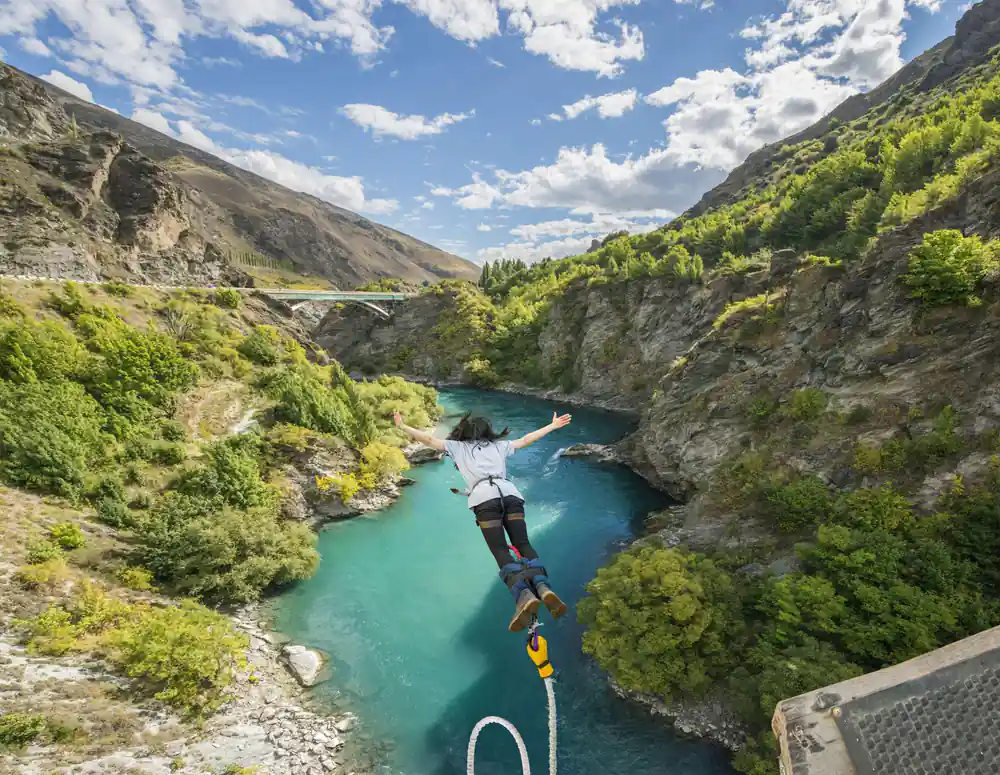
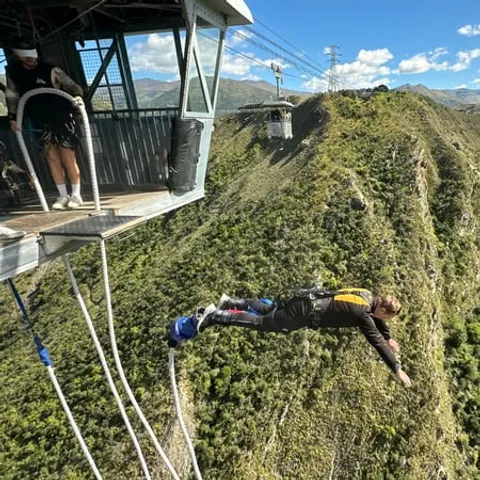
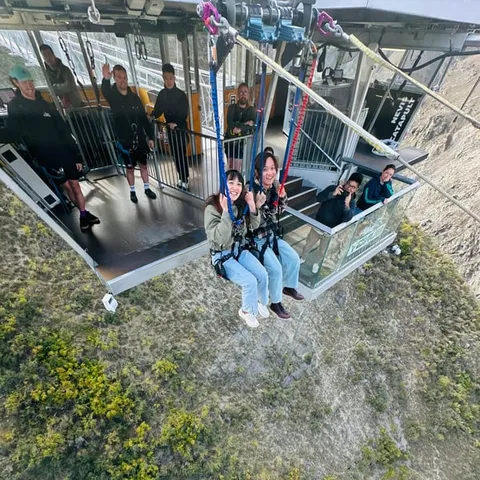
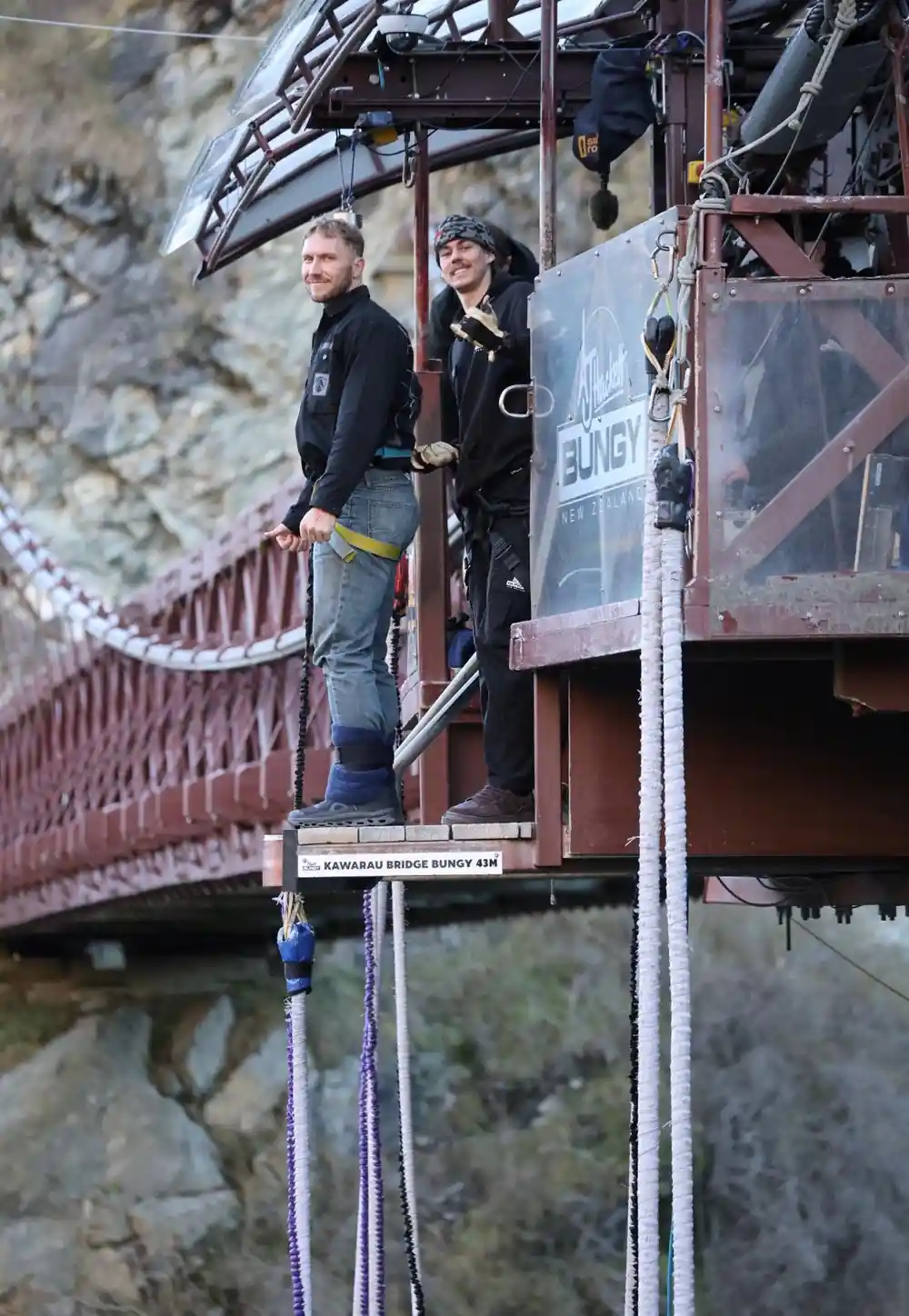
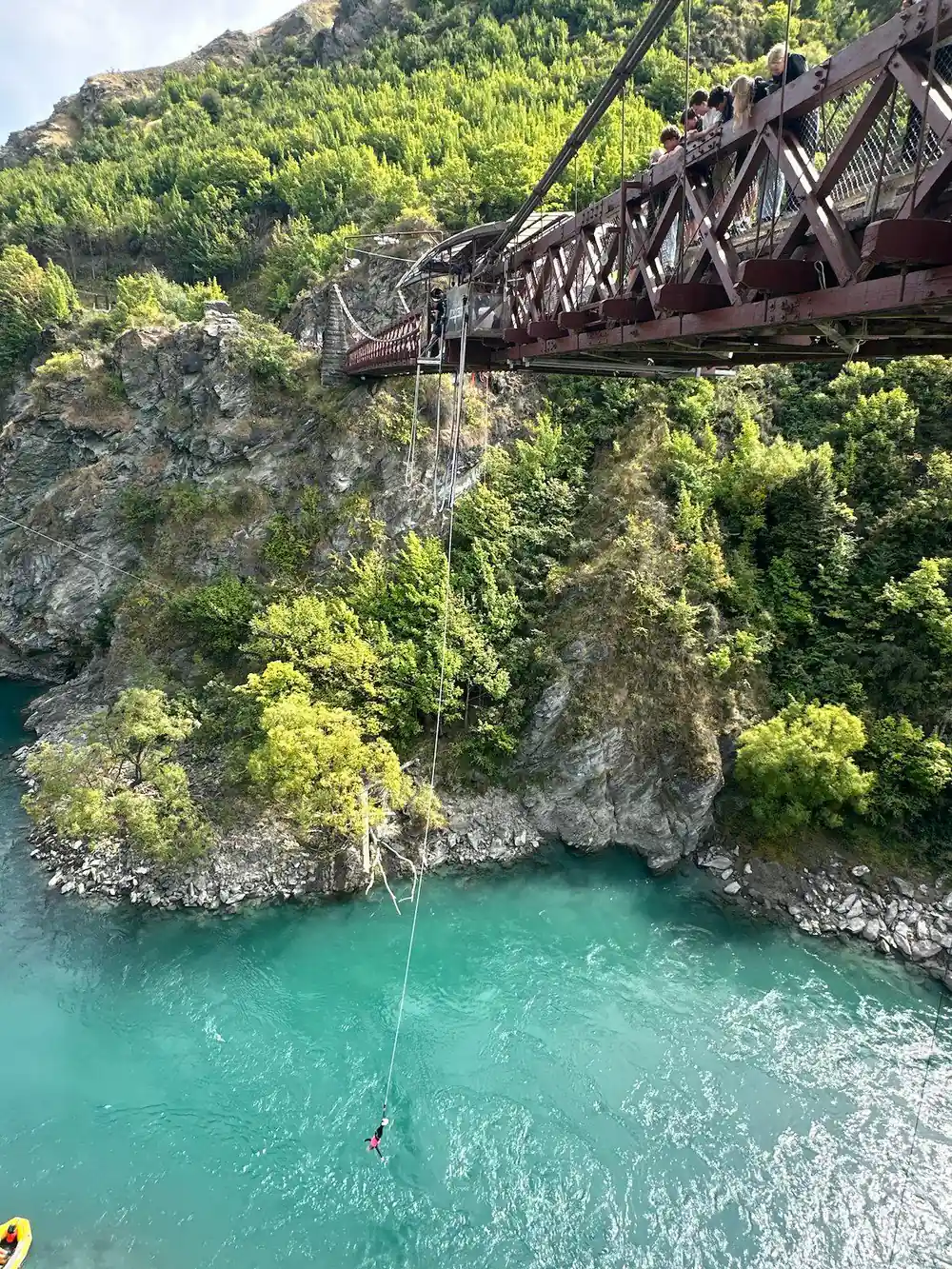
On 12 April 1988, AJ Hackett and Henry van Asch stood on the Kawarau Bridge in the Gibbston Valley and launched the world's first commercial bungy jump. The site they chose, a historic 1880s suspension bridge over the Kawarau River 43 metres above the water, still hosts the original jump today.
Who the Kawarau Bridge Bungy suits
Worth knowing first
Why there is a choice at the Kawarau Bridge
The Kawarau Bridge is where commercial bungy began. On 12 April 1988, AJ Hackett and Henry van Asch launched the world's first commercial bungy jump from the bridge in the Gibbston Valley, and the jump site stands 43 metres above the water.[3] That date shapes the day out: you are not only doing an activity, you are standing on the platform that started the whole thing.
The site sits in a gorge with a river running through it, and the same spot supports more than one kind of leap. Alongside the bungy there is a swing, and there is a zipride, and you can book a combination of two of them. Each is listed separately with its own price, its own time on site and its own small-group limit, so the real question is which sensation you want: a fall, a swinging arc, or a fast line above the water.
Practical differences matter too. The Kawarau Bridge Bungy listing runs 1 - 2.5 hours, is limited to 6 participants and uses an English-speaking instructor, from US$188.[1] The Kawarau Swing beside it, sold as solo, tandem or triple, also runs 1 - 2.5 hours and is limited to 6 participants, from US$141.[2] The Kawarau Zipride is from US$29 and runs 1 - 2.5 hours as well.[9]
The solo jump off the Kawarau Bridge
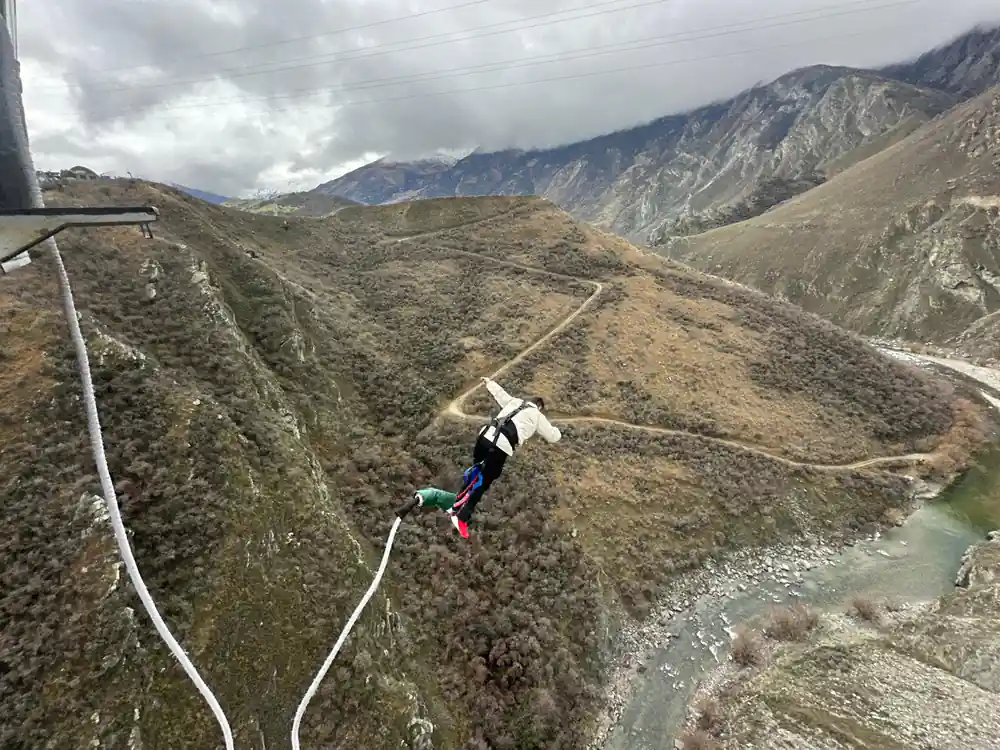
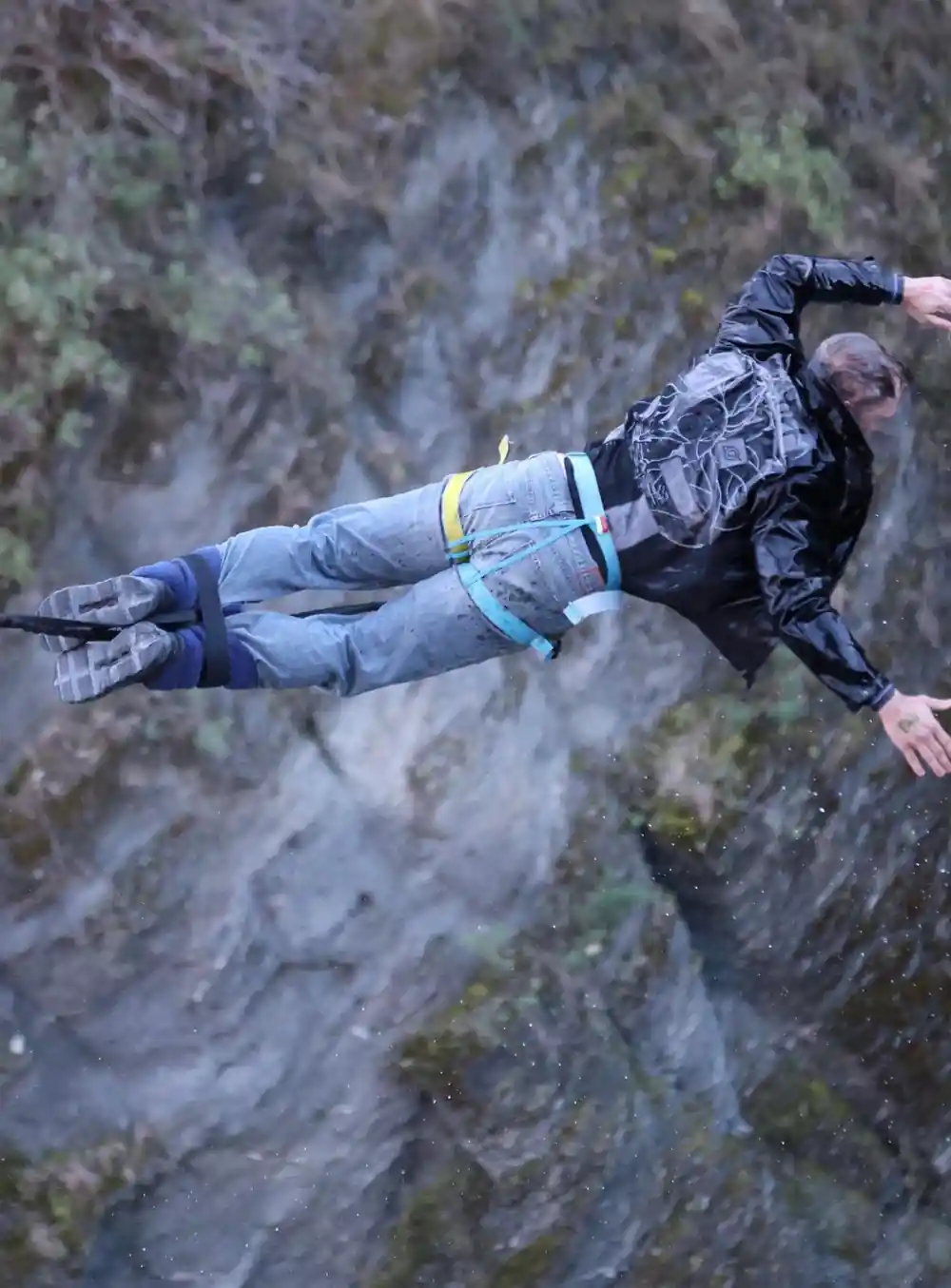
Most people come for the bungy itself. You are weighed, harnessed and walked out onto the bridge, and then it is you, the cord and the river. The Kawarau Bridge Bungy listing runs 1 - 2.5 hours once you are on site, is limited to 6 participants and uses an English-speaking instructor.[1] In New Zealand, bungy operators are required to be registered under the Health and Safety at Work (Adventure Activities) Regulations 2016 and must periodically pass independent safety audits.[8]
The track record here is long. By 1994, 100,000 jumps had been completed at Kawarau Bridge.[10] That is a lot of people standing on the same planks, looking down at the same water, working out whether to go feet first or to simply let go and trust the harness.
Height is the number everyone asks about. The bridge is 43 metres above the water.[3] If you have jumped before and want more air, the Queenstown area has other sites: the Ledge is 47m and the Nevis is 134m.[11] The Nevis Bungy listing runs 4 hours and is from US$232.[6]
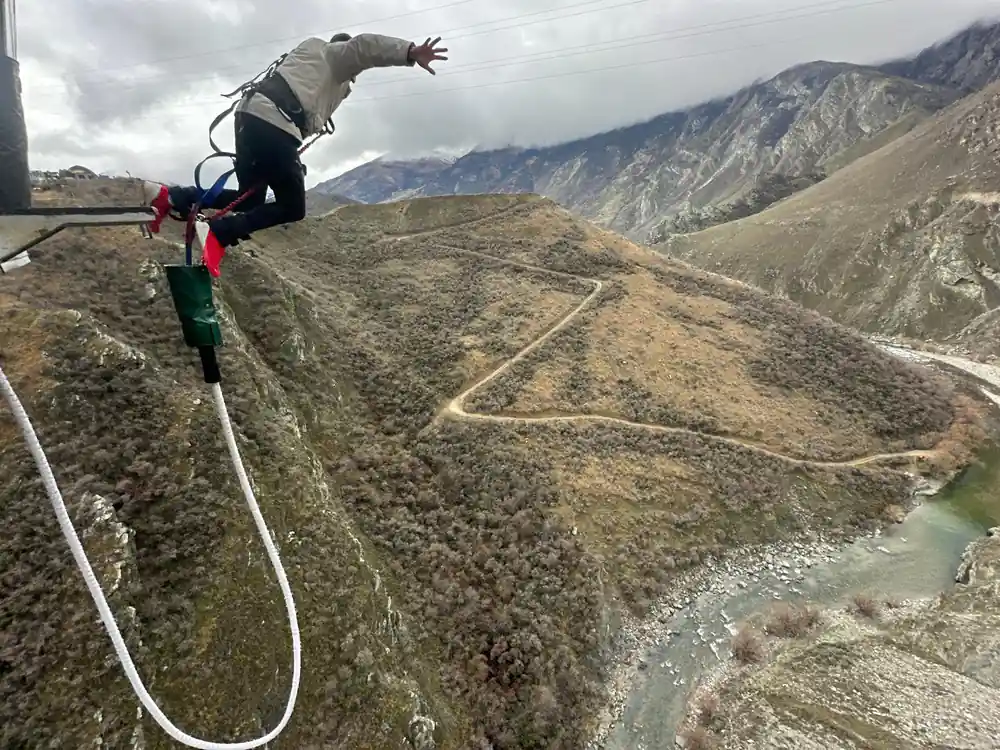
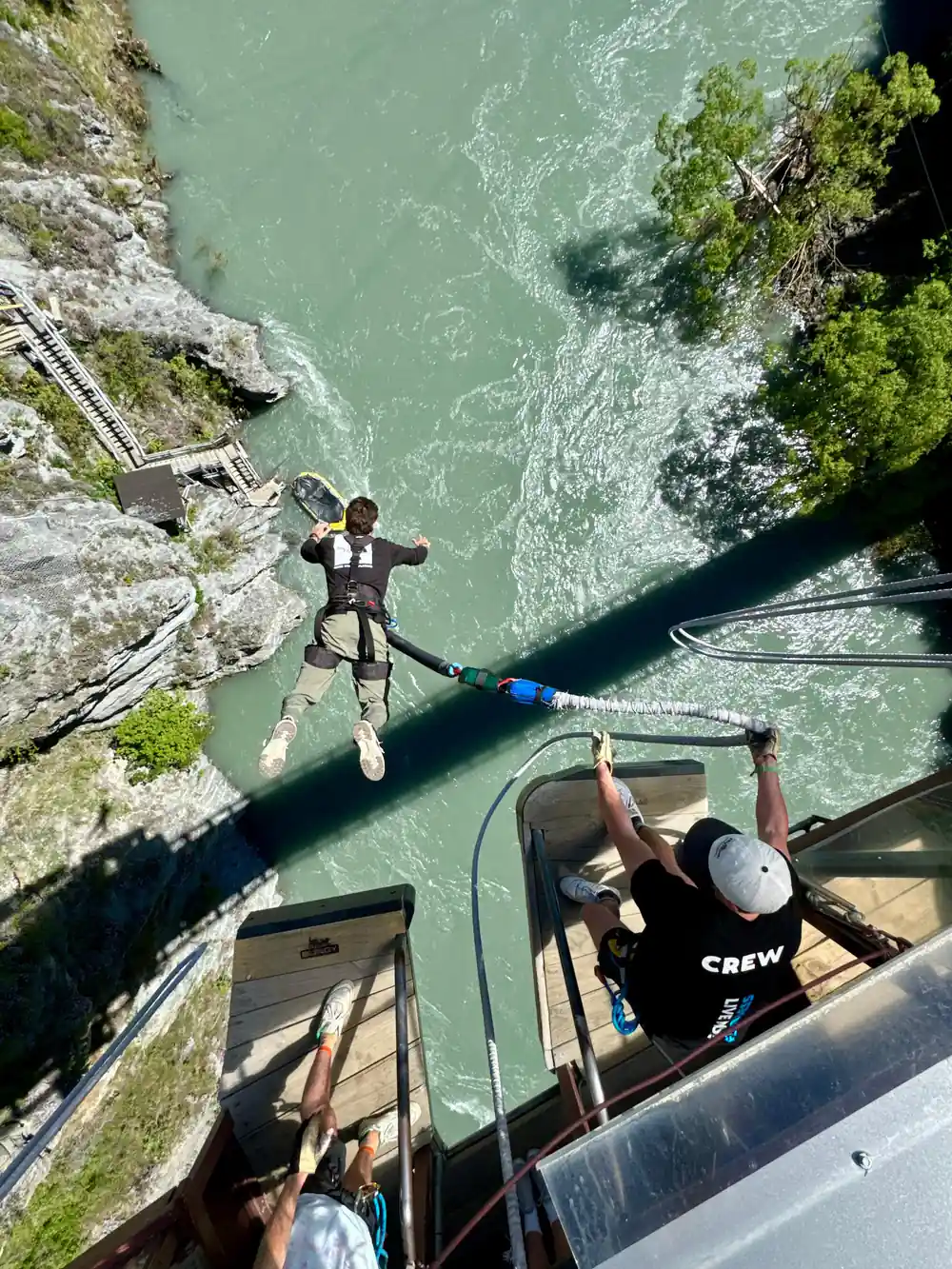
The Kawarau Bridge hangs above a river that runs green and cold through the gorge.
Tandem and triple jumps at the Kawarau site
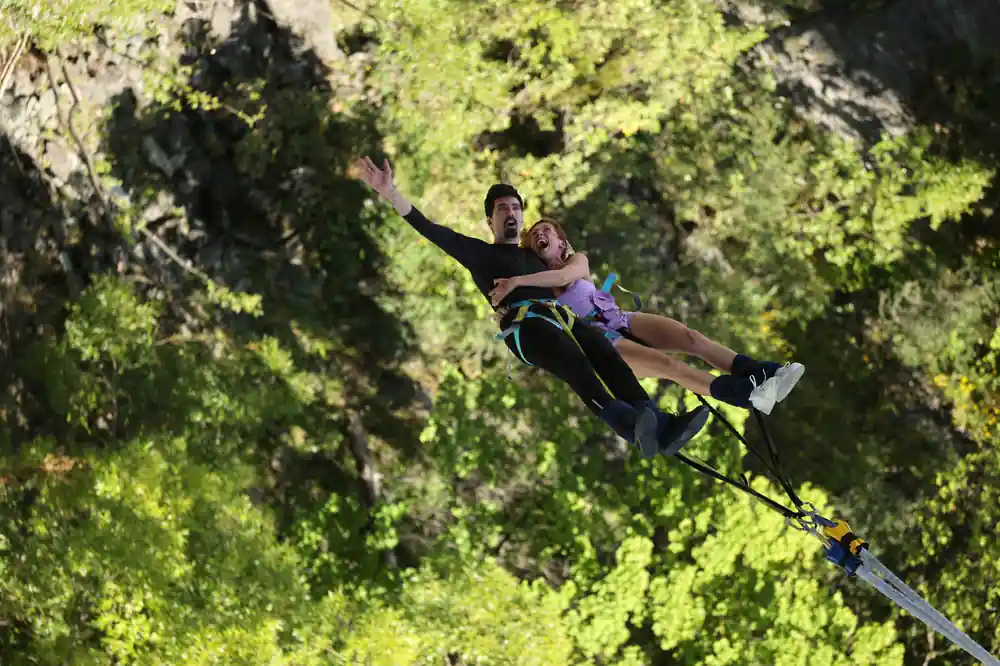
Tandem jumping at the Kawarau site sits with the swing rather than the bungy on the listings. The Kawarau Swing is sold as solo, tandem or triple, from US$141, runs 1 - 2.5 hours, is limited to 6 participants and uses an English-speaking instructor. It is rated 4.88 from 39 reviews.[2]
If you want both, the Kawarau Bridge bungy swing combo pairs a jump and a swing in one booking, from US$270, also running 1 - 2.5 hours with a limit of 6 participants. It is rated 4.80 from 7 reviews.[12] Both options are short, so they suit people who want the whole thing done before lunch.
There is a canyon option too. People searching for a Kawarau Bridge canyon swing usually mean the swing over this gorge, and the canyon version in the area is the Nevis Swing, where participants complete a 300m arc.[13] That listing runs 4 hours, is limited to 8 participants and is from US$191.[7]
How the water touch works at the bridge
A water touch is the version of the jump where the fall is set to finish at the river surface rather than high above it. It is the question most people ask at the counter, and it is the part of the day that has least to do with the booking screen and most to do with the bridge, the cord and the water.
The river underneath is a working river, not a pond. The Kawarau River is a much deeper and bigger river, flowing through Central Otago vineyards.[14] Rafting trips on it finish with a 400 meter long, grade 3/4 rapid.[14] From the bridge you look down at water that has cut this gorge over a very long time, and the colour shifts with the light through the day.
Ask the crew when you check in about the water and what is possible for your jump on the day. They know the water level, the wind and the cords, and they will tell you plainly what they can set up. If a water touch matters more to you than anything else, say so before you are harnessed rather than on the platform.
from US$188
The Kawarau Bridge Bungy listing starts from US$188, runs 1 - 2.5 hours and is limited to 6 participants.[1]
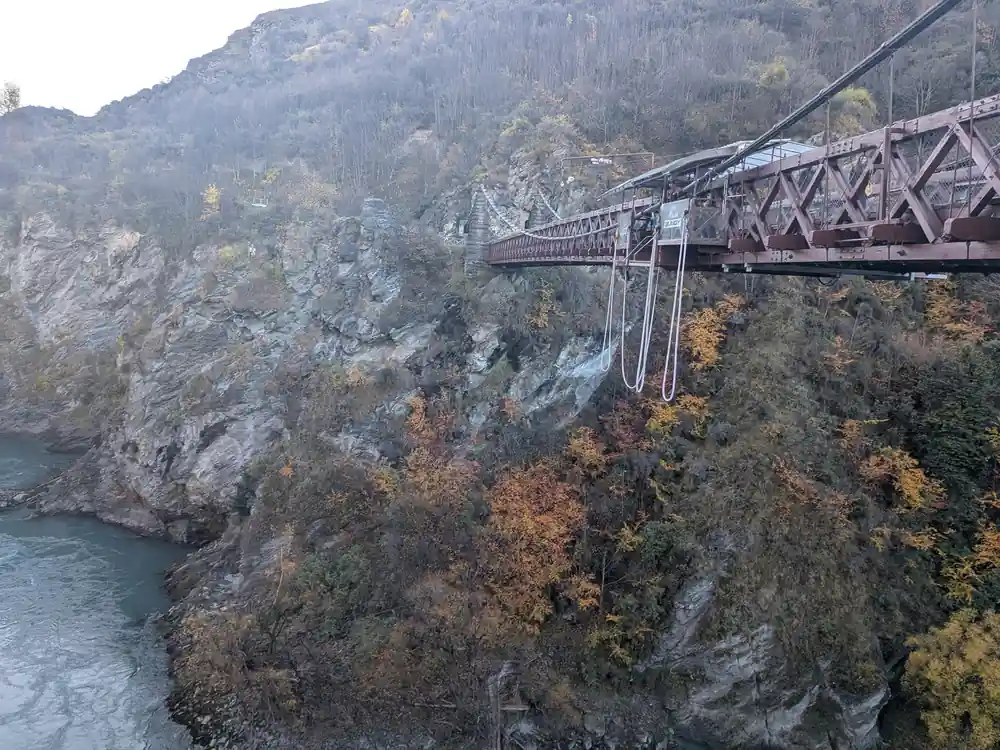
The Kawarau River gorge below the bridge
The gorge is schist country: grey and gold rock faces, tussock on the tops, and a river running green and blue through the middle. The bridge itself is a historic suspension bridge, and it moves a little underfoot, which makes the whole thing feel more serious than a purpose-built tower would.
There is gold in this story. Gold was first discovered in the Kawarau Gorge in the early 1860s, sparking a rush that transformed Central Otago.[15] Miners worked these banks long before anyone thought of jumping off the bridge, and the rock walls on both sides carry that history in their shape.
Today the gorge draws crowds of a different kind. Queenstown welcomed 412,897 international visitors in 2024.[16] On a summer morning the platform can be busy, and the drive out from town runs past vineyards and rock walls before the bridge appears below the road.
Which jump to take for a first time
For a first bungy, the bridge is the obvious place to start. It sits 43 metres above the water, it is a short drive from town, and the whole thing fits into 1 - 2.5 hours.[1][3] If the idea of falling head first turns your stomach, the swing is the alternative: you are released into an arc rather than a straight drop, and you can do it solo, tandem or triple.[2]
If someone in your group would rather not fall at all, the Kawarau Zipride in Queenstown is the easy yes: a 130m line that reaches a highest speed of 60 km/h.[17] It runs 1 - 2.5 hours, is limited to 6 participants and is from US$29.[9] You can pair the Kawarau Bridge bungy and zipride as two bookings on one trip out.
Combos suit anyone with half a day spare. The Kawarau Bungy & Swing Combo is from US$270 and runs 1 - 2.5 hours.[12] Over at the Nevis, the Bungy & Swing Combo runs 4 hours and is from US$364.[18]
Changing your mind before or on the day
Plans move. The listings come with free cancellation up to 24 hours in advance for a full refund, and you can reserve now and pay later.[1] If the weather turns, or your group gains or loses a jumper, that window is the one to remember before you drive out.
You can also change your mind about what you do, if not always about when. Watching a few jumps before your slot is part of the fun here, and if you want to switch from one style to another, raise it at check-in rather than on the platform.
Whoever jumps, plan the trip around the drive. The Kawarau Bridge Bungy Centre is around a 25-minute drive (23 km) from Queenstown via State Highway 6.[4] Leave margin, take a windproof layer for the bridge, and keep the afternoon loose if you have booked a second activity.
From-prices on the Kawarau site listings
Each bar is a from-price taken from that listing on GetYourGuide:[1][2][9][12]
What each Kawarau option costs from
From-prices in US dollars, taken from[9],[2],[1] and[12].
When to book your Kawarau jump
Step by step at Kawarau
Pick your style
Bungy, swing, zipride or a combo of two. Each one is a separate listing with its own price and duration.
Book a slot
Choose a date and check availability to see starting times. Reserve now and pay later is offered on the listings.
Get to the bridge
The centre is around a 25-minute drive (23 km) from Queenstown via State Highway 6.[4]
Check in and get kitted
The crew walks you through the harness and the brief before you head out onto the platform.
Jump, then look back
Take the photos, watch the next jumper and give yourself time before the drive back to Queenstown.
Book your Kawarau Bridge Bungy and pick your style
from US$189Reserve now & pay later