In a nutshell
- The Kawarau Bridge bungy site is 43 metres above the water, on a historic suspension bridge in the Gibbston Valley.[1]
- A bungee free fall lasts about 5 seconds and reaches about 70 km/h, which is longer than it sounds and shorter than you expect.[2]
- In the Queenstown area the Ledge AJ Hackett site is 47m and the Nevis AJ Hackett site is 134m.[3]
- The Kawarau Bridge Bungy Centre is around a 25-minute drive (23 km) from Queenstown via State Highway 6.[4]
- The Kawarau Bridge Bungy listing starts from US$188, with reserve now and pay later and free cancellation up to 24 hours in advance.[5]
- Top choice Kawarau Bridge Bungy from US$188 Rated4.90 from 195 reviews[5]Duration1 to 2.5 hours[5]Group sizeLimited to 6 participants[5] Check availability
- Nevis Bungy from US$232 Rated4.96 from 100 reviews[6]Duration4 hours[6]Group sizeLimited to 6 participants[6] See this tour
- Nevis Canyon Swing from US$191 Rated4.86 from 144 reviews[7]Duration4 hours[7]Group sizeLimited to 8 participants[7] See this tour
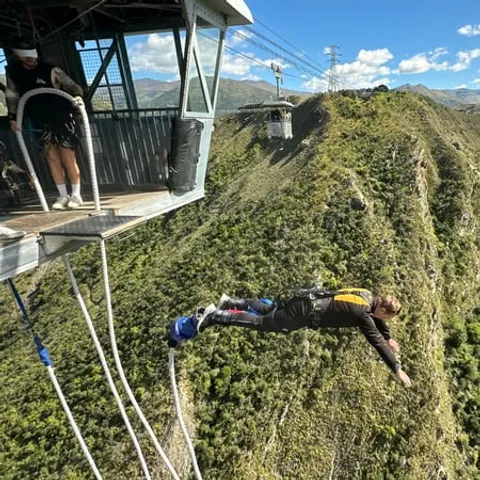
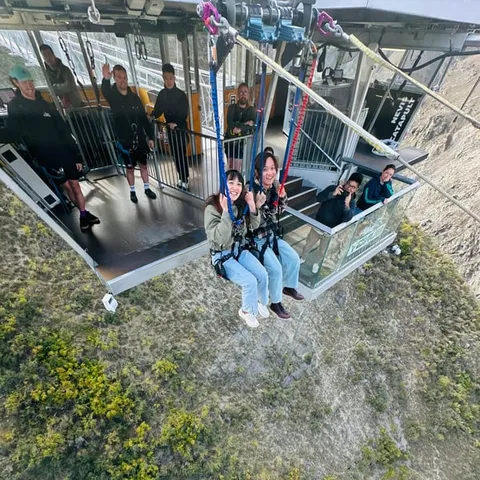
On 12 April 1988, AJ Hackett and Henry van Asch stood on the Kawarau Bridge in the Gibbston Valley and launched the world's first commercial bungy jump. Their site, a historic 1880s suspension bridge over the Kawarau River 43 metres above the water, still hosts the original jump today.
Is the Kawarau Bridge jump worth it?
Worth knowing first
The Kawarau Bridge bungy height, explained
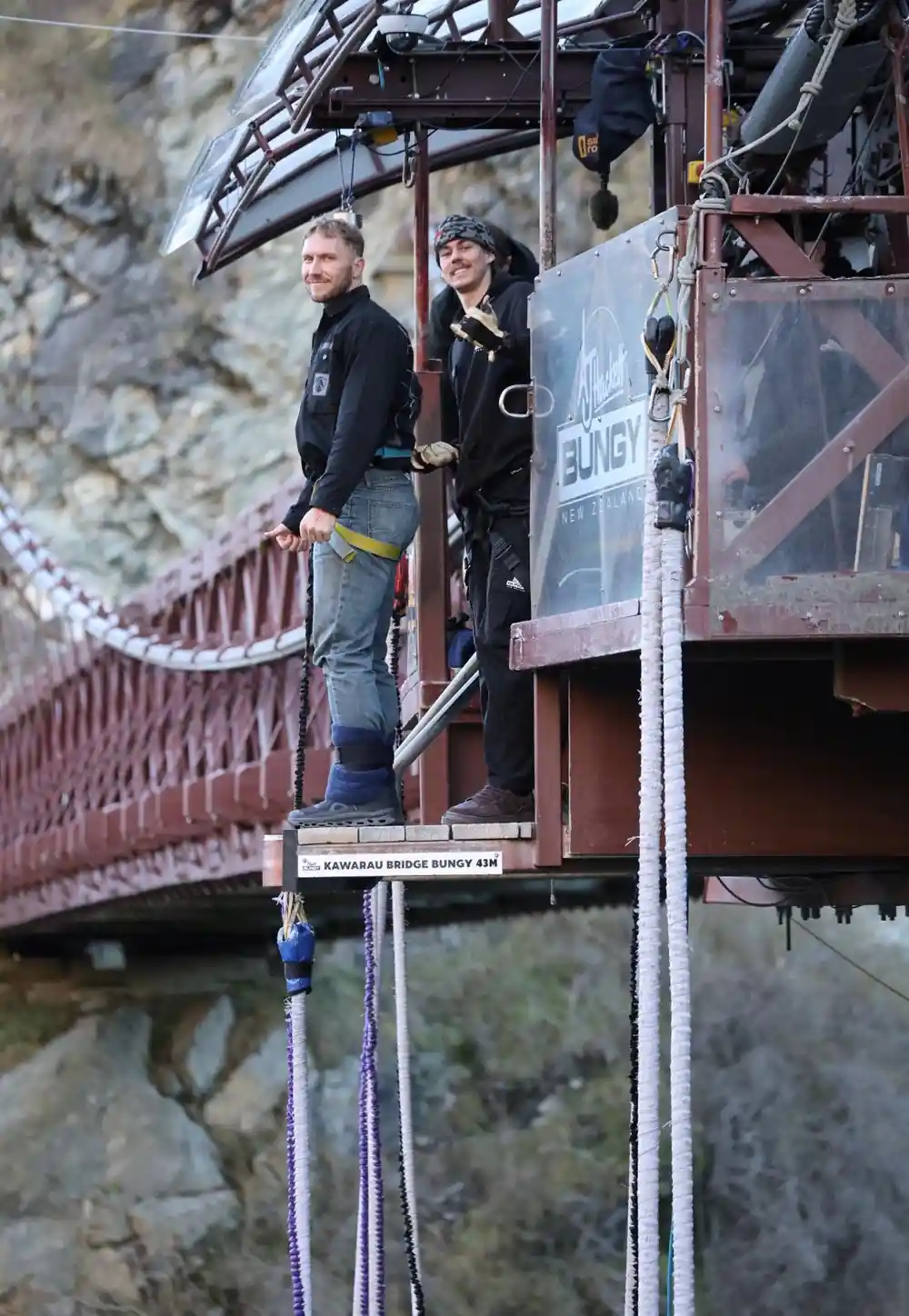
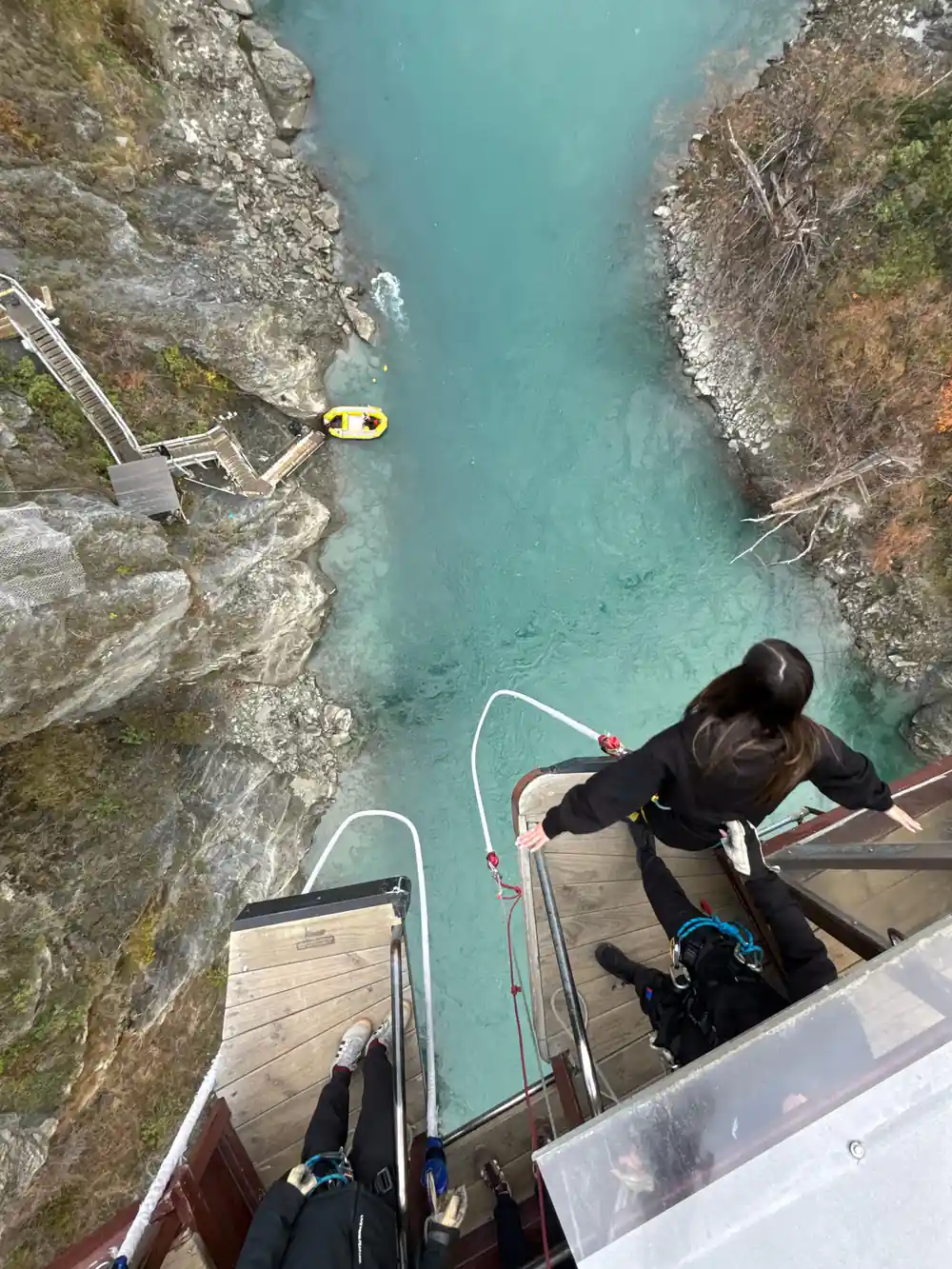
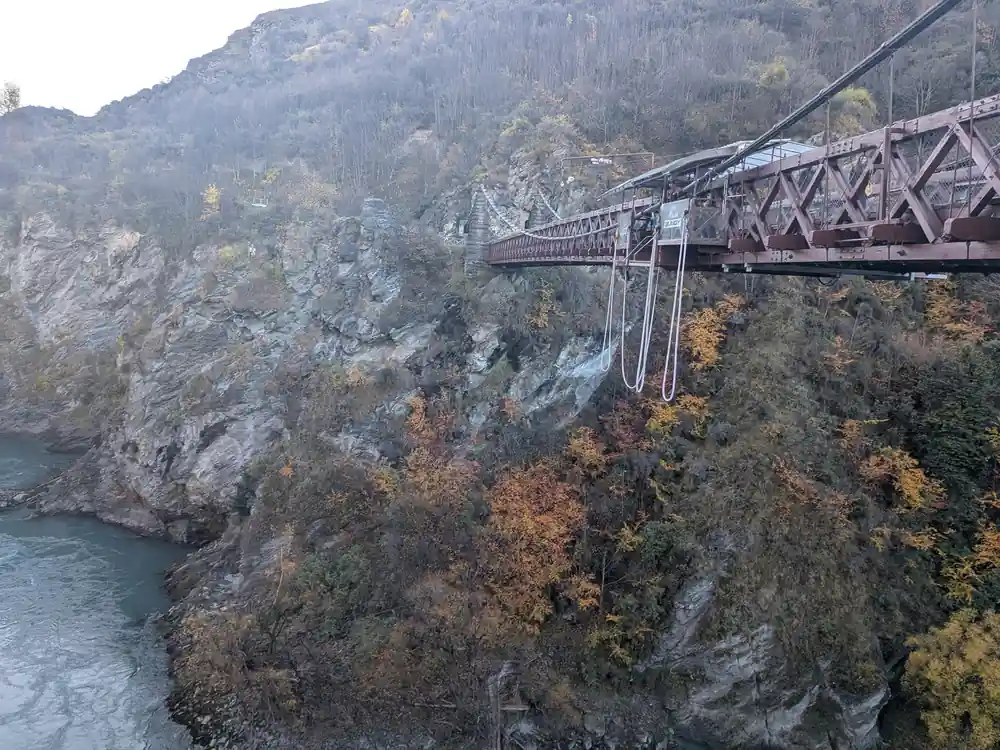
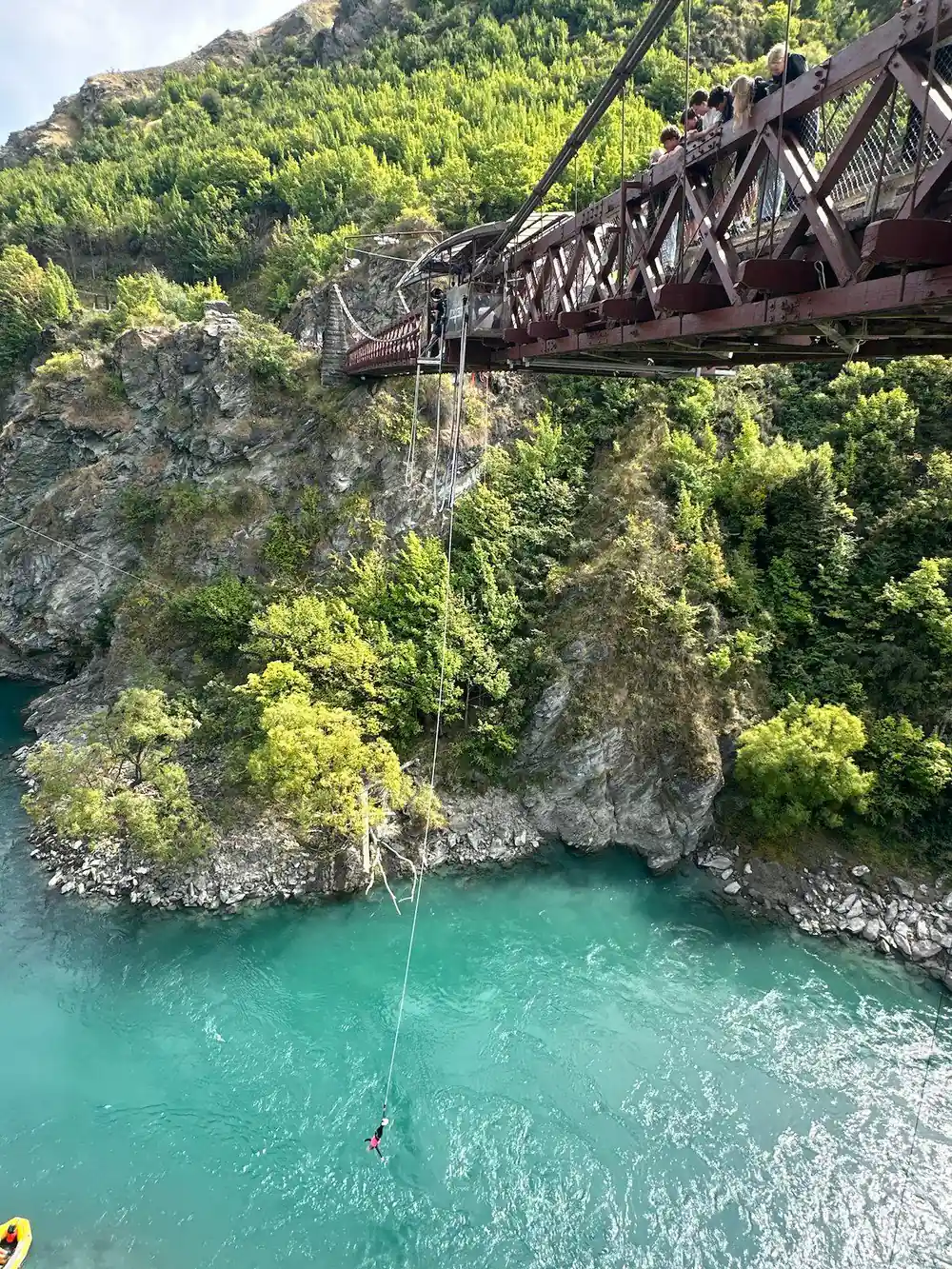
The Kawarau Bridge bungy height is the first thing people ask about, and the answer is a tidy one. The site is 43 metres above the water, on a historic suspension bridge that spans the Kawarau River in the Gibbston Valley.[1] That measurement runs from the bridge deck down to the river. The water can look close and the drop can still feel long. Jumpers step off a platform built out over the gorge, with the road bridge behind them, the cables humming, and the river running green and fast below.
The number is also old, in the best way. The world's first commercial bungy jump was launched at this bridge on 12 April 1988.[1] By 1994, 100,000 jumps had been completed there.[10] The bridge has not moved and the queue still forms every morning. Ask for the Kawarau bridge height and you get the same answer the earliest jumpers got: 43 metres above the water.[1] Everything else about the day, the nerves, the countdown and the bounce, grows out of that one measurement.
What the drop feels like from the platform
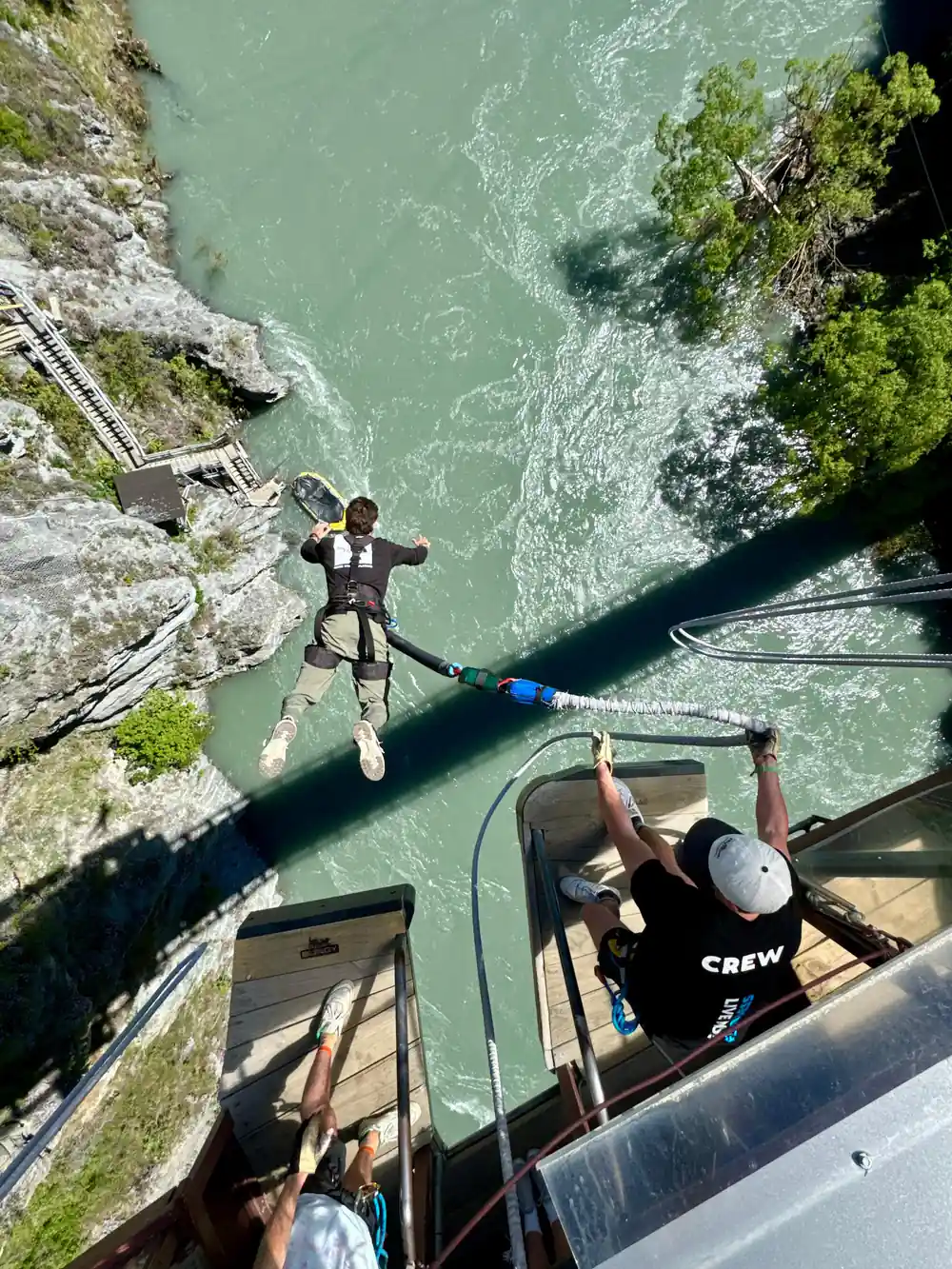
Standing on the platform, the height reads differently than it does on a page. The river becomes a moving band of green and grey, the cables hum, and the crew talk you through the countdown with the calm of people who do this all day. Then your body takes over. A bungee free fall lasts about 5 seconds and reaches a speed of about 70 km/h, which is long enough for the ground to rush up, for your stomach to arrive late, and for you to hear yourself shout.[2]
Then the cord catches and everything goes quiet for a moment. You hang there, upside down or the right way up depending on how you left the platform, with the river moving underneath and the bridge above you. The climb back up is short. The story lasts a lot longer. The anticipation is the hard part. The falling is the fun part. Some people laugh on the way down, some go silent, and a few ask whether they can go again before they are even unhooked.
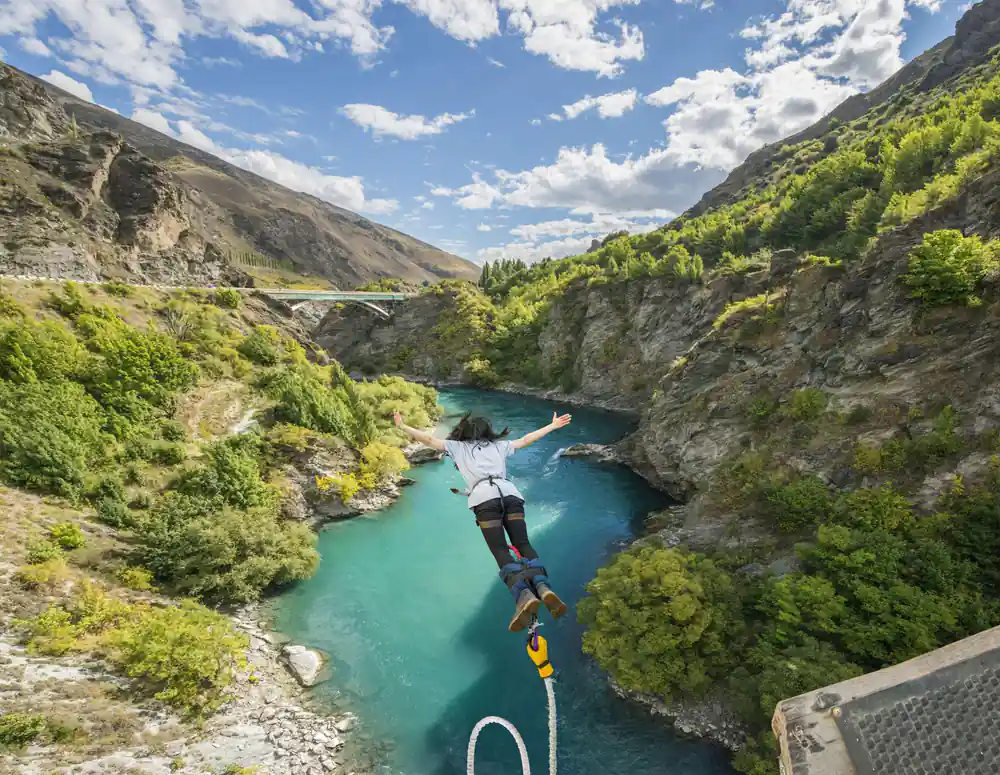
The Kawarau Bridge hangs above a green river in a gold rush gorge.
How the Kawarau Bridge jump compares
The Queenstown area has more than one place to throw yourself off, and the figures are worth knowing before you choose. In the Queenstown area, the Ledge AJ Hackett site is 47m and the Nevis AJ Hackett site is 134m.[3] The Kawarau bungy height is given as a measurement to the water below.[1] Put the three side by side and the order is clear. What the figures cannot tell you is how each one feels, and that is the part that decides whether you enjoy it.
Height changes the view more than it changes the fear. On the bridge you can pick out rocks, riffles and the odd kayak in the water below. From a much higher platform the river turns into a thin green line. Some jumpers want the biggest number they can find. Others want the one where the water is close enough to watch all the way down and the whole thing is over in a moment. There is no wrong answer, and the Kawarau Bridge is a fine place to find out which sort of jumper you are.
Is a lower jump easier? Not exactly
It would be reasonable to assume that a lower jump is a gentler one, and it is worth knowing that the assumption only half holds. The platform is low enough that you can see individual rocks in the river and high enough that the people on the bank look small. What really shifts with height is the waiting and the view, not the drop in your stomach. The countdown still happens. Stepping off the edge is still a step into nothing, and the cord still decides when you stop.
The checks behind the scenes are the same wherever you jump. In New Zealand, bungy operators are required to be registered under the Health and Safety at Work (Adventure Activities) Regulations 2016 and must periodically pass independent safety audits.[9] At AJ Hackett, the minimum age to jump is 10 years old, the minimum weight is 35kg, and the maximum weight is 235kg.[8] Meet those and the bridge is a sensible place to start, whether it is your first jump or your fifth.
43 metres
The Kawarau Bridge bungy site sits 43 metres above the water, on a historic suspension bridge in the Gibbston Valley.[1]
The rebound, and how close you get to the water
The fall is only half of the ride. Once the cord stretches and stops you, it pulls you back up again, and you bounce a few times before the crew lower you down. How close you get to the river depends on your weight, the style of jump you choose and how the cord is set that day. Some jumps end with a hand reaching towards the water. Others finish with a quick, businesslike hoist back to the platform. Either way, being pulled back towards the bridge is the part people forget to expect.
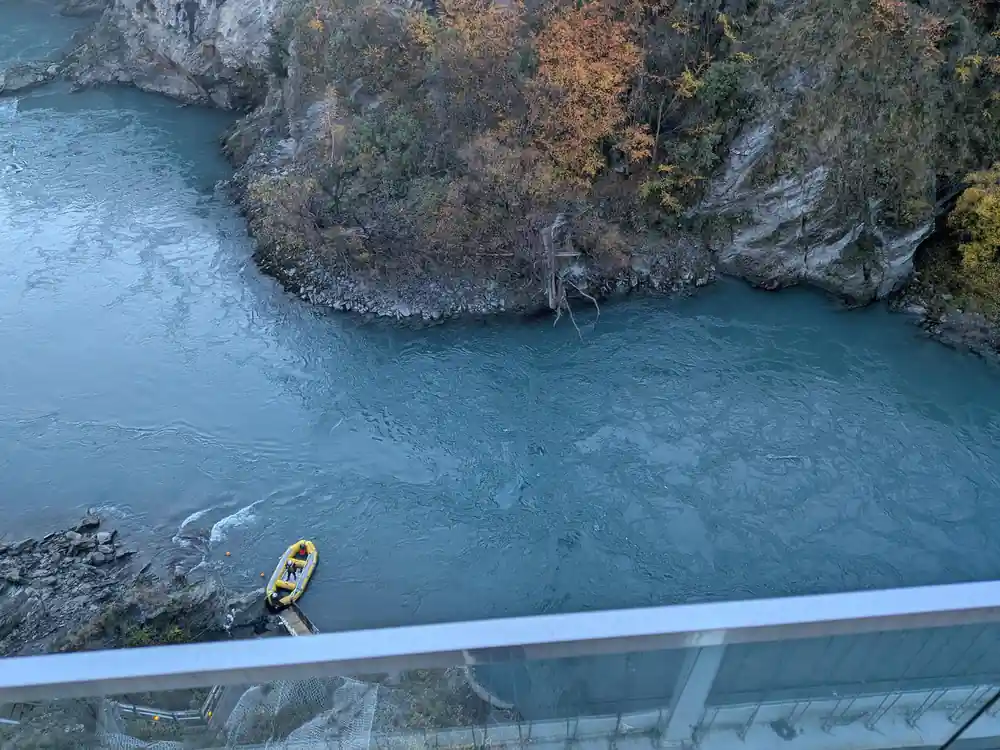
Below you is real water doing real river things. The Kawarau is cold, fast and much bigger than it looks from the road, and it carries on downstream whether anyone is jumping or not. From the recovery point you get a second look at the gorge from water level, which is a view most people only ever see from a car window. Then it is back up, unclip, and find your friends. Bring someone with a camera for the walk back, because the faces are half the fun.
What it looks like from up there
The gorge is a long, dry looking valley of schist rock, tussock and wild thyme, with the river cutting through the middle of it. From the bridge you can see the road following the water, the terraces above it and the vineyards that Central Otago is known for. Gold was first discovered in the Kawarau Gorge in the early 1860s, sparking a rush that transformed Central Otago.[11] The bridge itself is an old suspension span, still doing the job it was built for. Only now there is a bungy platform hanging off it and a queue of people in harnesses.
Look one way and you get the canyon opening out towards the vineyards. Look the other way and you get the bungy centre, the viewing decks and the spectators who are very glad to be on solid ground. Below, the river keeps moving. Queenstown welcomed 412,897 international visitors in 2024, and the accents on the platform show it.[12] If you want a particular time of day, book it rather than turning up and hoping. The view from the bridge is worth the trip even for the people who stay on the right side of the railing.
Getting there, and making a day of it
From Queenstown, the Kawarau Bridge Bungy Centre is around a 25-minute drive (23 km) via State Highway 6.[4] The road runs through the gorge and the turn-off is signed. If you would rather not drive, sort out transport when you book, and give yourself spare time either way, because the gorge road can be slow behind a campervan. Once you are there, everything happens in one compact spot: check-in, the briefing, the platform and the viewing areas, so you are never far from your bag or your friends.
There is plenty nearby to fill the rest of the day. Alongside the bungy, GetYourGuide lists a Kawarau Swing and a Kawarau Zipride, and there is rafting on the Kawarau River.[13][14][15] Book an early slot and you still have the afternoon for the wineries, the river or the drive on towards Cromwell. If you are travelling with people who would rather watch, the viewing areas give them a front row seat while you queue. The Kawarau Bridge jump height is one number. The day you build around it is up to you.
Bungy site heights around Queenstown
AJ Hackett site heights in the Queenstown area: Kawarau Bridge[1], Ledge and Nevis[3].
Jump prices in US dollars
US dollar from-prices from the GetYourGuide listings: Kawarau Bridge Bungy[5], Nevis Bungy[6], Nevis Swing[7], Kawarau Bungy & Swing Combo[16], Kawarau Zipride[14]. These listings quote no separate child rate.
When to book your Kawarau jump
Your jump, step by step
Book your slot
Choose your date and time on the listing; reserve now and pay later lets you hold it without paying straight away.[5]
Drive out to Gibbston
The centre is around a 25-minute drive (23 km) from Queenstown via State Highway 6.[4]
Check in at the centre
Staff confirm your weight against the limits: minimum 35kg and maximum 235kg, with a minimum age of 10 years old.[8]
Walk out onto the bridge
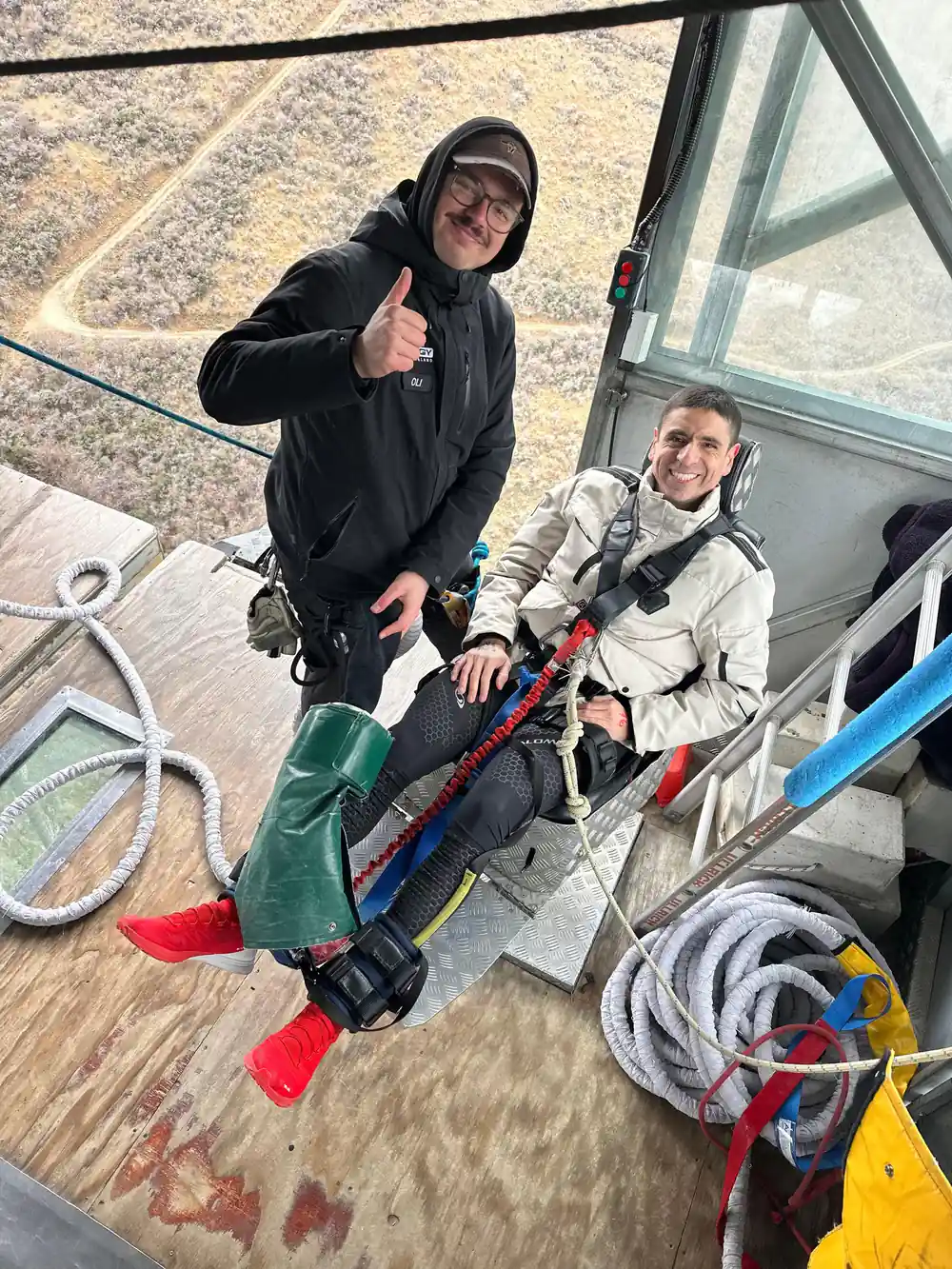
Get harnessed, listen to the briefing and take the short walk to the platform over the river.
Jump and come back up
Step off, fall for about 5 seconds at around 70 km/h, bounce, and get lowered to the recovery point.[2]
Ready to see the Kawarau River from the platform?
from US$189Reserve now & pay later