In a nutshell
- A jump from a historic suspension bridge 43 metres above the Kawarau River, at the site of the world's first commercial bungy jump.[1]
- The Kawarau Bridge Bungy is from US$188, with free cancellation up to 24 hours in advance and the option to pay later.[2]
- Allow 1 to 2.5 hours on the day, with a small group limited to 6 participants and an instructor who speaks English.[2]
- At AJ Hackett the minimum age is 10 years old, the minimum weight is 35kg and the maximum weight is 235kg.[3]
- The Bungy Centre is around a 25-minute drive (23 km) from Queenstown via State Highway 6.[4]
- Top choice Kawarau Bridge Bungy from US$188 Rating4.90 from 195 reviews[2]Duration1 to 2.5 hours[2]Group sizeLimited to 6 participants[2]CancellationFree up to 24 hours before[2] Check availability
- Nevis Bungy from US$232 Rating4.96 from 100 reviews[5]Duration4 hours[5]Group sizeLimited to 6 participants[5]CancellationFree up to 24 hours before[5] See this tour
- Nevis Canyon Swing from US$191 Rating4.86 from 144 reviews[6]Duration4 hours[6]Group sizeLimited to 8 participants[6]CancellationFree up to 24 hours before[6] See this tour
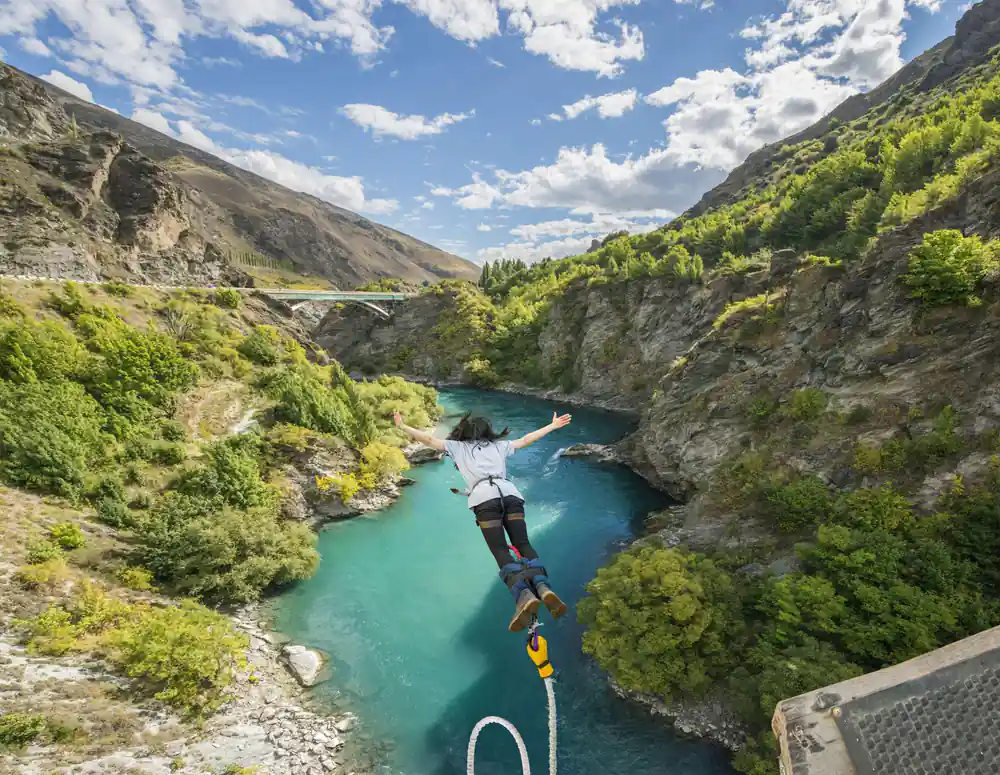
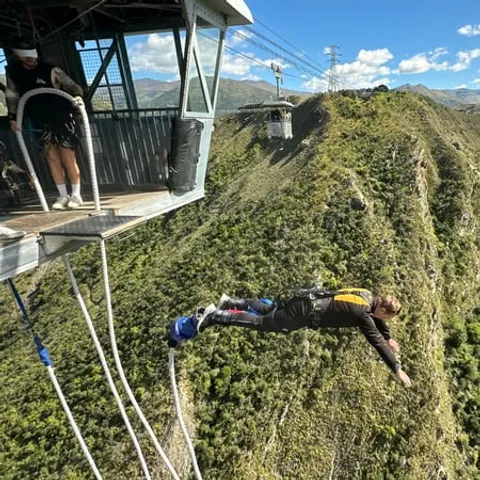
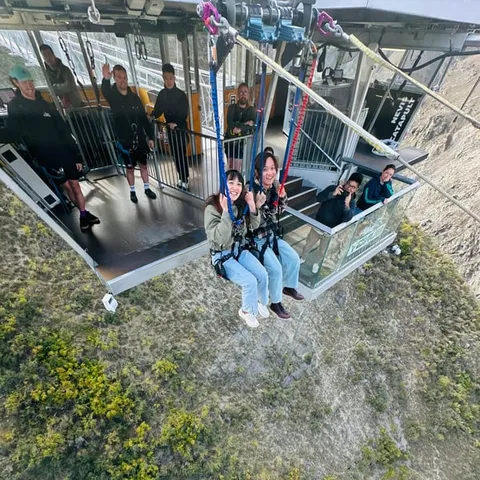
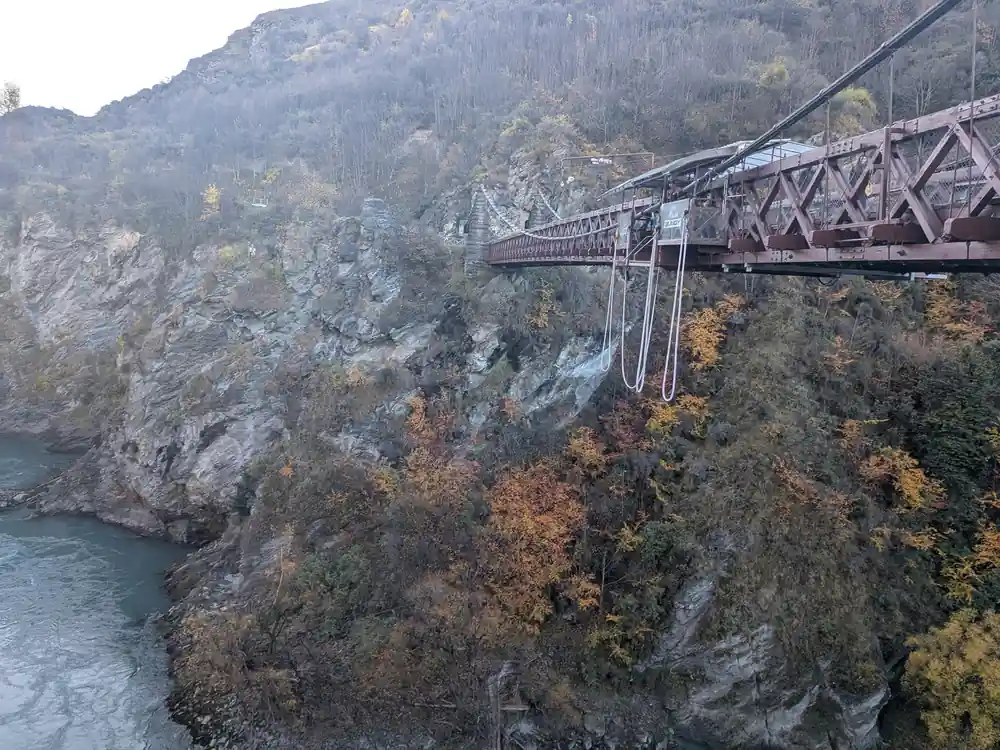
On 12 April 1988, AJ Hackett and Henry van Asch stood on the Kawarau Bridge in the Gibbston Valley and launched the world's first commercial bungy jump. The site, a historic 1880s suspension bridge over the Kawarau River 43 metres above the water, is still the home of the original jump today.
The verdict on the Kawarau Bridge bungy
Know before you go
What actually happened at Kawarau Bridge
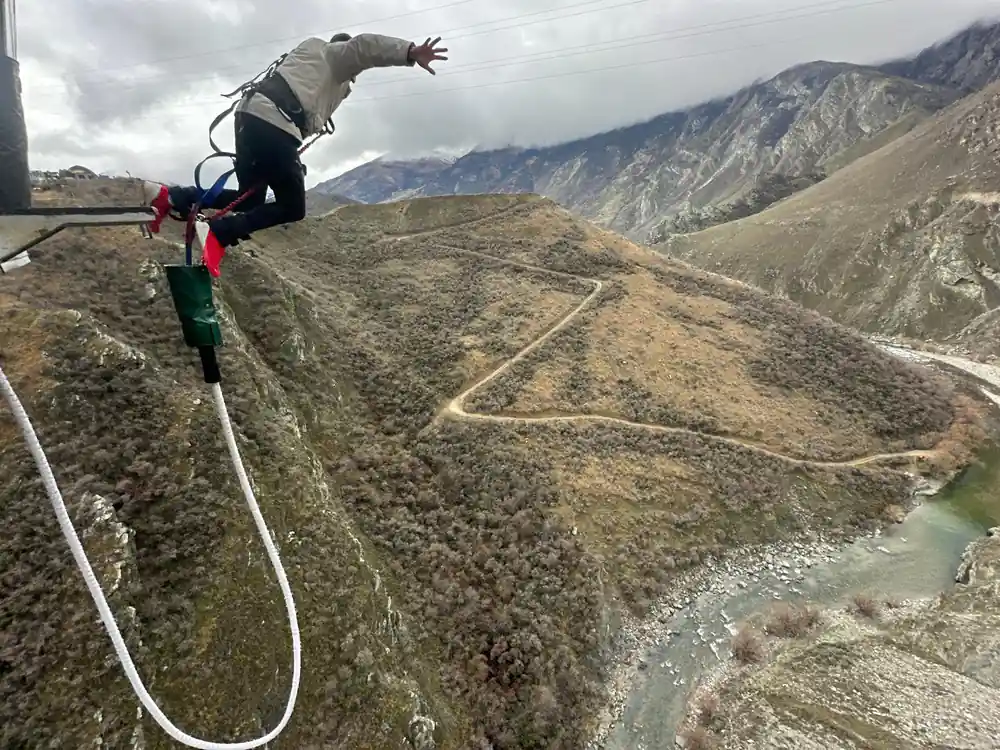
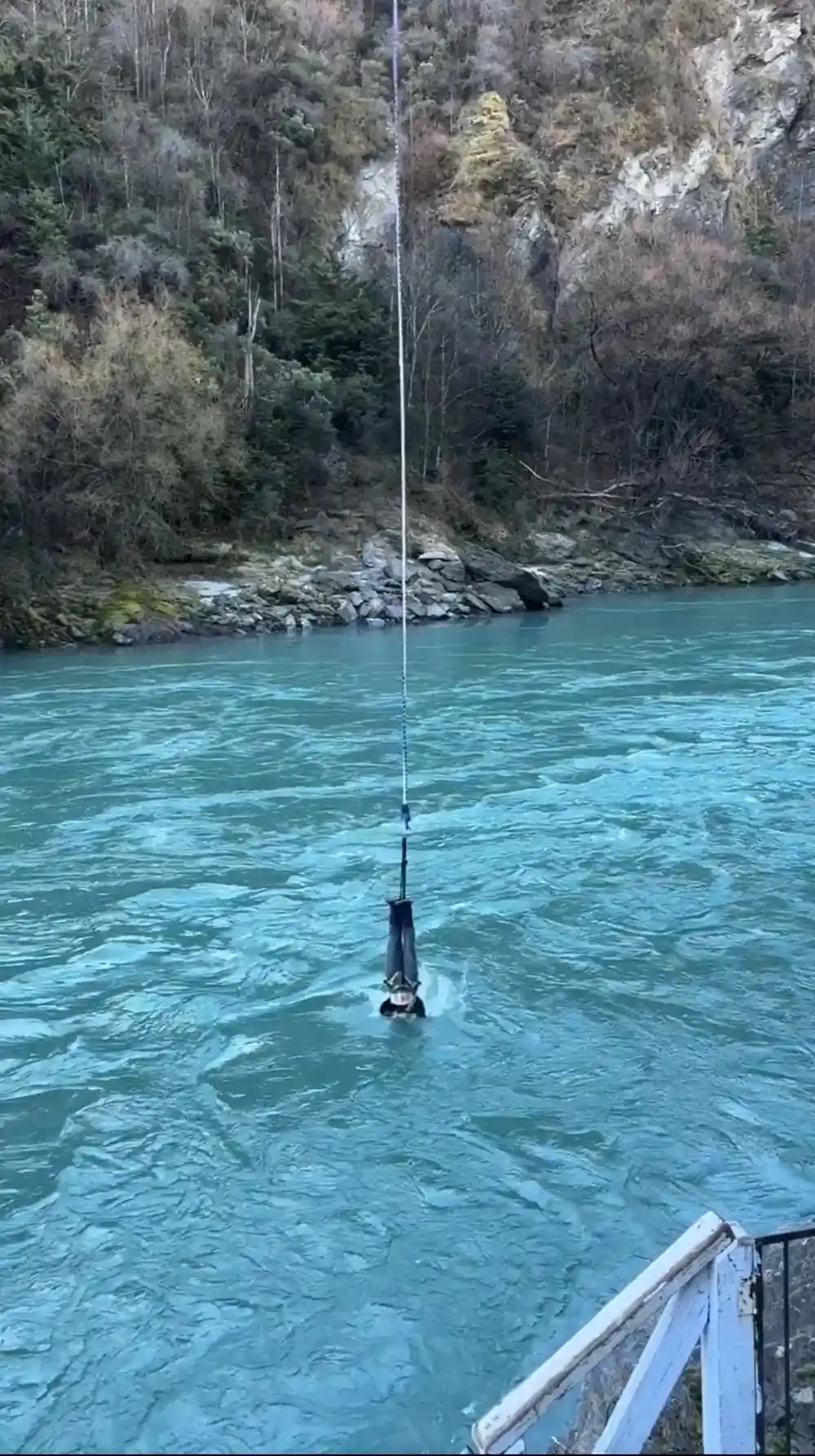
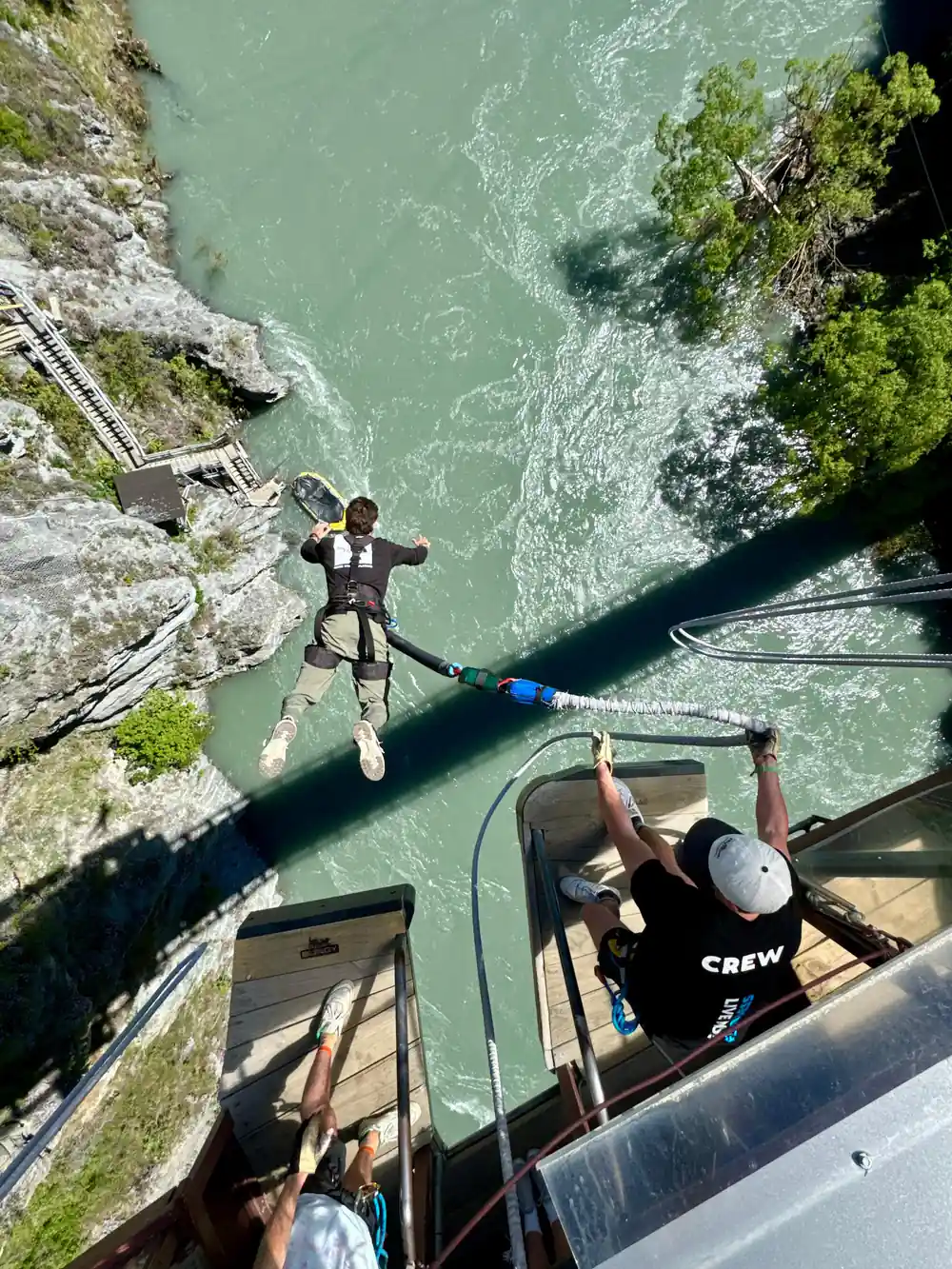
On 12 April 1988, AJ Hackett and Henry van Asch stood on the Kawarau Bridge in the Gibbston Valley and launched the world's first commercial bungy jump.[1] The bridge is a historic suspension bridge over the Kawarau River, and the jump site sits 43 metres above the water.[1] Kawarau Bridge AJ Hackett is the name on the site today, and the jump still leaves from the same span, with the same green river running underneath and the same hills closing in on both sides.
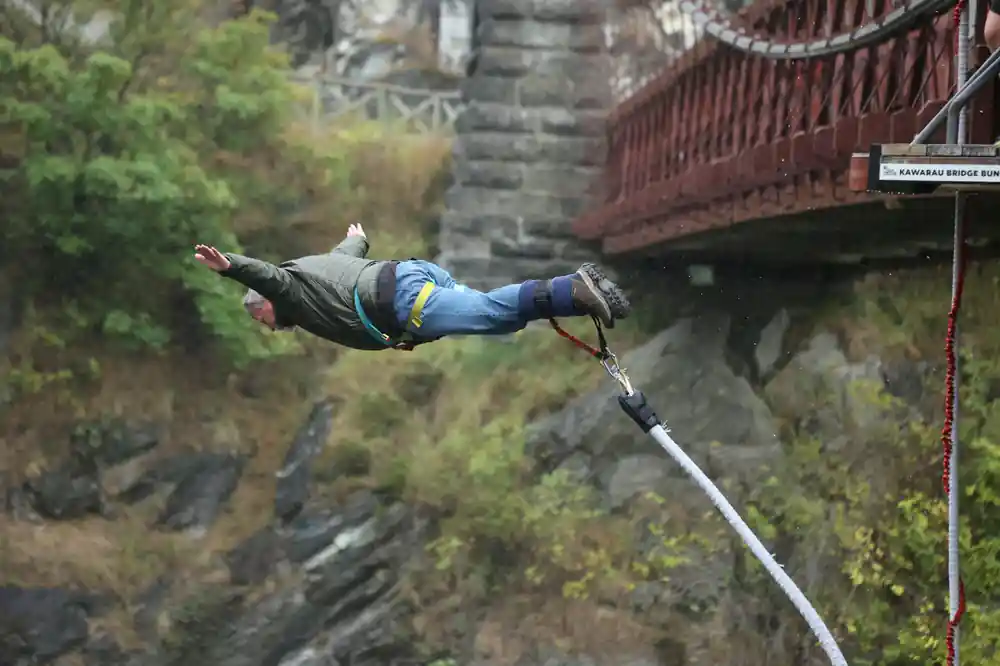
What that first day looked like is easy to picture. A small crowd on the bank, a rope, a bridge, and one person stepping off into empty air above the Kawarau. What has changed since is mostly scale and polish: there is a check-in desk, a harness fitting, a briefing and a recovery system to bring you back up. What has not changed is the fall itself. You still step off a platform, still have a moment of quiet on the way down, and still end up hanging over a river with your heart going.
The exact spot is worth knowing before you go. The bridge sits in the Gibbston Valley, at the point where the Kawarau River runs between rock walls and rows of vines, and the bungy centre is built on the bank beside it. It is a short stop on the road into the wine country, and it is easy to combine with a cellar door or a walk beside the water.
Where the idea came from
Bungy did not begin as a tourism business. Its roots are in the land diving of Pentecost Island in Vanuatu, where men jump from tall wooden towers with vines tied to their ankles as part of a seasonal ritual. Photographs and film of those jumps travelled out into the world, and a small group of New Zealand climbers and skiers began experimenting with climbing rope, bridges and the idea that a long fall could be caught safely and made repeatable.
If you have seen photos of the AJ Hackett bungy Kawarau site, they usually show the same few things: a narrow platform, a long cord running away from it, and a river that looks a lot further down than it is. The reason this particular bridge worked was practical rather than romantic. The Kawarau Bridge Bungy Centre is around a 25-minute drive (23 km) from Queenstown via State Highway 6, so people could come and watch, then decide on the spot whether to jump.[4]
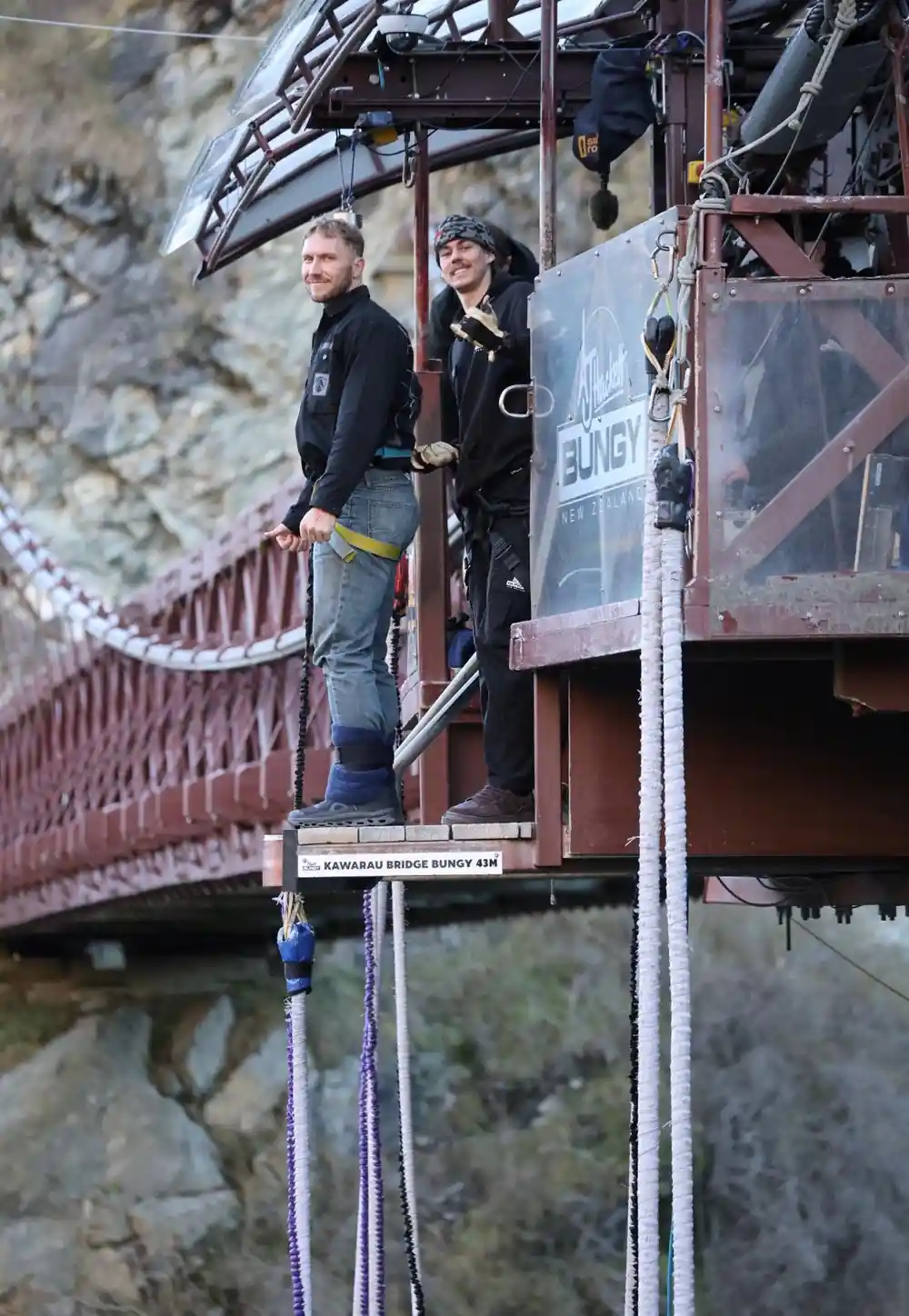
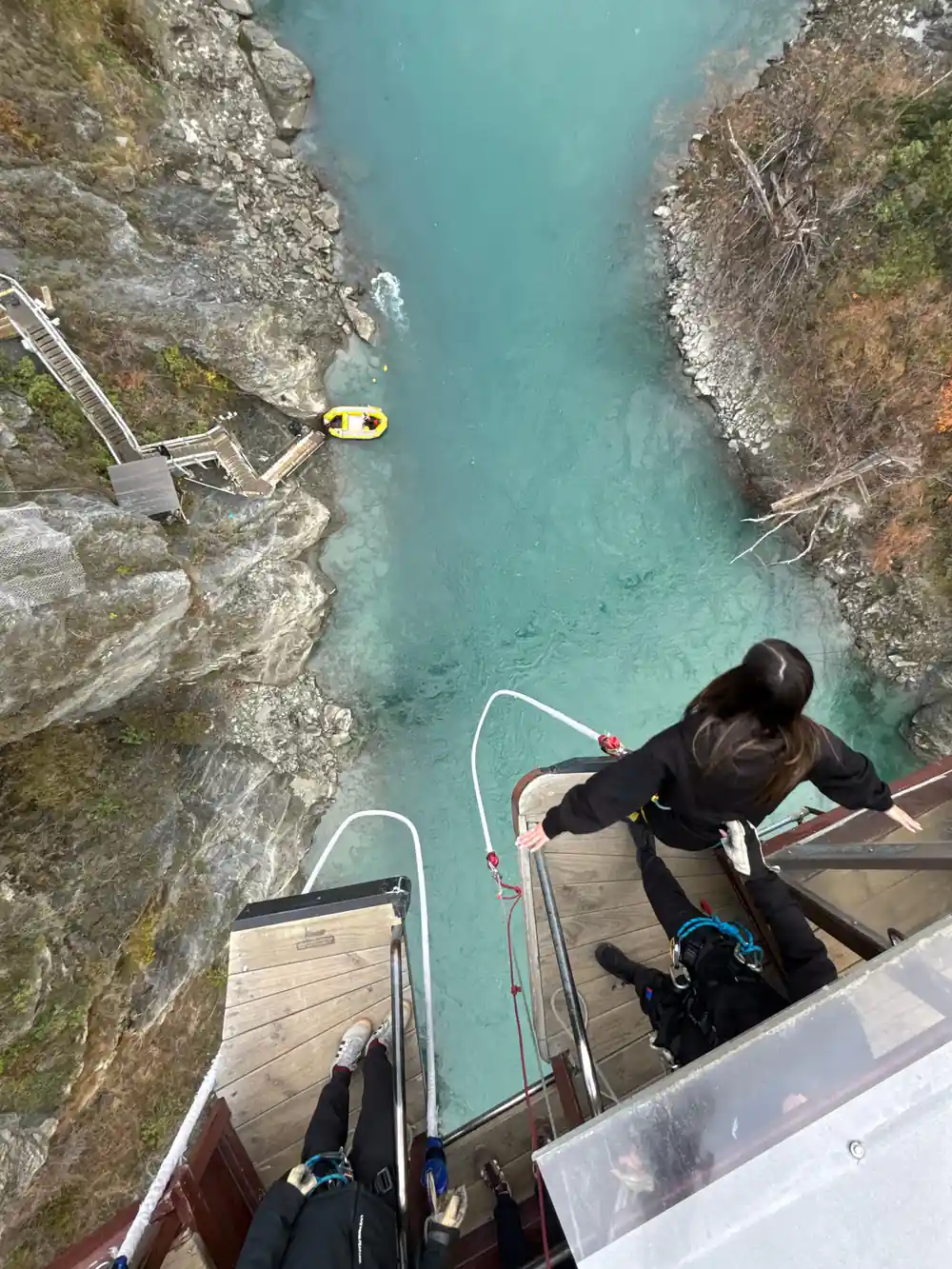
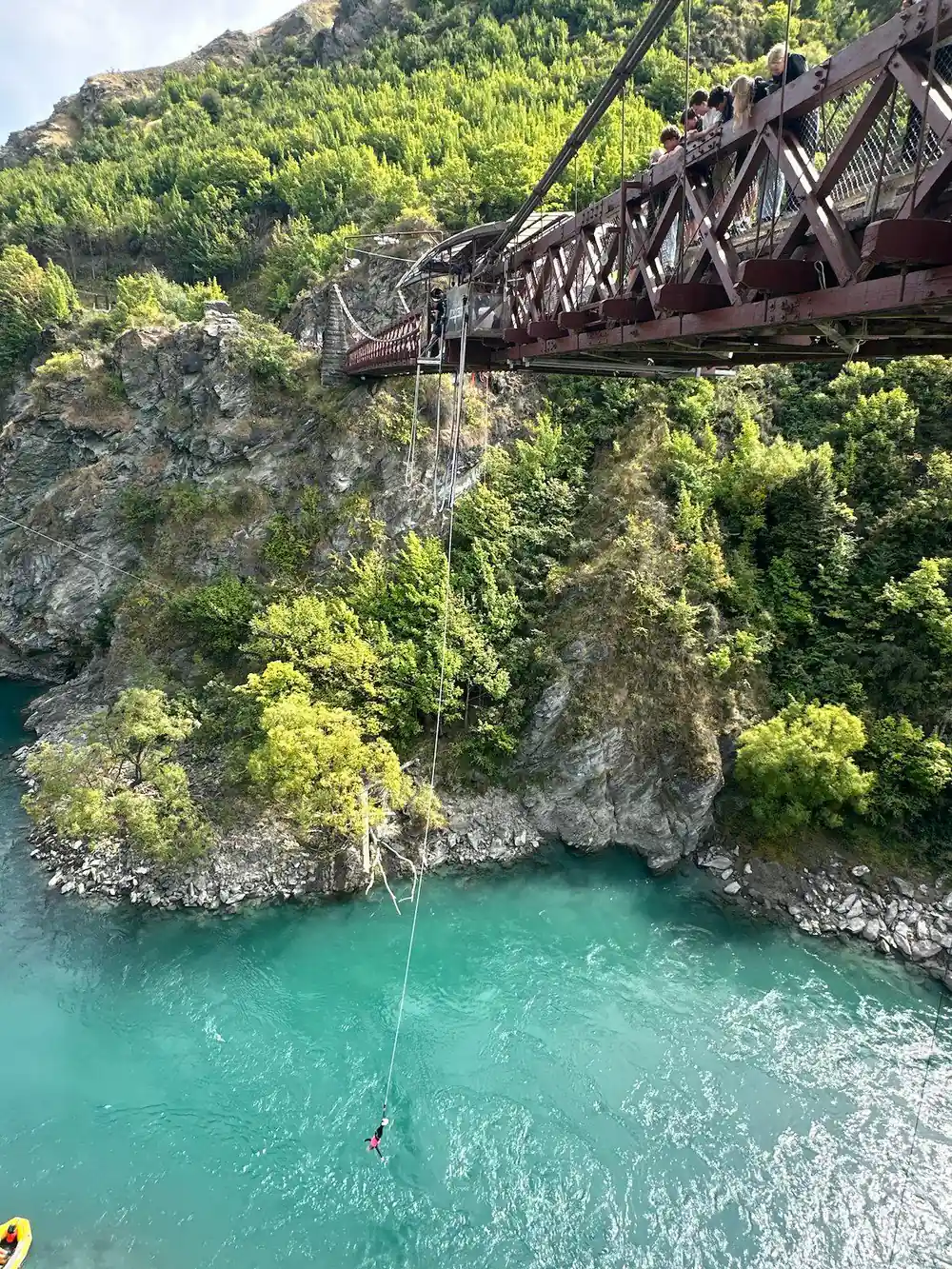
Looking down from the bridge at the turquoise water of the Kawarau River.
Why this bridge was the right site
The Kawarau Gorge was already a place where people came to try their luck. Gold was first discovered in the Kawarau Gorge in the early 1860s, sparking a rush that transformed Central Otago.[8] The road through the gorge stayed busy after the miners moved on, first with fruit growers and later with vineyards, and the bridge kept carrying people across the river the whole time.
A suspension bridge gives a jumper something a cliff edge cannot. It puts the drop straight into the middle of a river, with solid ground at both ends for the crew, the gear and the people waiting their turn. The AJ Hackett bungy Queenstown Kawarau Bridge site uses exactly that shape. The jump platform hangs out over the water, the bank is close enough for friends to watch from, and the walk back to the centre is short enough to manage on shaking legs.
What the Kawarau jump started
One site did not stay one site for long. In the Queenstown area, AJ Hackett also runs the Nevis at 134m and the Ledge at 47m, both a very different shape of jump from the bridge.[9] Kawarau stayed the original, and by 1994, 100,000 jumps had been completed there.[10] It is the place that turned bungy into something you could book rather than a story you heard secondhand.
Queenstown as a whole leaned into the adventure business, and the town is now a base for far more than one bridge. Queenstown welcomed 412,897 international visitors in 2024.[11] Jet boats run on the Shotover and Kawarau rivers from US$87, the Nevis Swing completes a 300m arc, and there are jump platforms in several directions out of town.[12][13] The Kawarau bridge is the original stop on that list.
The categories on the booking pages tell the story of what grew from here: bungy, swing, zipride, rafting and jet boats, each one a different way of moving through the same gorge. A single bridge above a river became a whole set of reasons for people to spend a few days in the mountains.
from US$188
The tour booked from this site runs 1 to 2.5 hours and is rated 4.90 from 195 reviews.[2]
Is the original operation still running?
Yes. The jump still leaves from the bridge, and the booking details are simple. The AJ Hackett Kawarau Bridge Bungy runs 1 to 2.5 hours, with a small group limited to 6 participants and an instructor who speaks English.[2] It is rated 4.90 from 195 reviews, and prices are from US$188.[2] Reviews break down as Guide 4.9, Transportation 4.9 and Value for money 4.7.[2]
Before you book, it helps to know the limits. At AJ Hackett, the minimum age to bungy jump is 10 years old, the minimum weight is 35kg and the maximum weight is 235kg.[3] In New Zealand, bungy operators are required to be registered under the Health and Safety at Work (Adventure Activities) Regulations 2016 and must periodically pass independent safety audits.[7] Booking is flexible as well: you can reserve now and pay later, and free cancellation applies up to 24 hours in advance for a full refund.[2]
Gold, wine and the gorge around the bridge
The valley around the bridge is worth more than the few minutes you spend on the platform. The Kawarau River is a much deeper and bigger river, flowing through Central Otago vineyards, and rafting trips on it end with a 400 meter long, grade 3/4 rapid.[14] Cellar doors sit within a short drive on the Gibbston side, the gorge narrows and opens as you follow the road through it, and the colour of the water shifts with the light.
You do not have to jump to enjoy the site. The Kawarau Zipride is a 130m long zipline that reaches a highest speed of 60 km/h.[15] The Kawarau Swing runs solo, tandem or triple and starts at US$141.[16] Both are run from the same bridge, so a nervous friend can do something gentler while you queue for the platform.
If you are driving, the gorge is the scenic part of the trip. The road runs beside the river with rock walls on one side and vineyards on the other, and there are pull-offs where you can stop for the view. Allow time to slow down on the way back, because the afternoon light in the gorge is worth stopping for.
Does the history change your jump?
It changes the feel of the day more than the mechanics of the jump. You wait on an old suspension bridge with the river far below, you watch the people ahead of you disappear over the edge, and then it is your turn. Nobody rushes you, and the crew talk you through the countdown before you go. Layers help, since the gorge can be cool and breezy even when Queenstown is warm, and shoes that stay on your feet beat anything loose.
The practical case for booking is easy to make. Free cancellation runs up to 24 hours in advance, you can reserve now and pay later, and prices are from US$188.[2] If you want a Queenstown bungy with real history under your feet, this is the one, and the walk back to the centre afterwards is where the story starts.
One last thing about expectations: this is a bridge jump, not a canyon plunge into the void. You can see the river, the banks and the people watching the whole time, which some people find easier than a platform above a gorge. If you want a bigger drop, the Nevis is 134m.[9]
How high the Queenstown jump sites are
Kawarau Bridge is 43 metres above the water[1]; the Nevis is 134m and the Ledge is 47m[9].
Kawarau and Queenstown adventure prices
From-prices in US dollars from GetYourGuide listings[2][5][6][16][17].
When to book your Kawarau Bridge jump
How the jump day runs
Book your slot
The Kawarau Bridge Bungy is from US$188, can be reserved now and paid later, and cancelled free up to 24 hours in advance.[2]
Check in at the centre
The Bungy Centre is around a 25-minute drive (23 km) from Queenstown via State Highway 6.[4] Wear layers and shoes that stay on.
Weigh in and gear up
At AJ Hackett the minimum age is 10 years old, the minimum weight is 35kg and the maximum weight is 235kg.[3]
Walk out onto the bridge
The platform sits 43 metres above the water on a historic suspension bridge over the Kawarau.[1] Then it is countdown and step.
Jump and walk it off
The booking runs 1 to 2.5 hours, with a small group limited to 6 participants.[2] Give yourself time afterwards.
Ready to jump from the Kawarau Bridge in Queenstown?
from US$189Reserve now & pay later