In a nutshell
- The Kawarau site sits 43 metres above the water and the world's first commercial bungy jump was launched there on 12 April 1988.[1]
- Free fall lasts about 5 seconds and reaches about 70 km/h, and the whole moment is easy to miss.[2] That is the argument for having it filmed.
- Jump crews work from the platform, the bridge walkway and a lower spot near the water, and each position gives a different picture of the fall.
- Ask at check-in what is being shot on your jump, when the files are ready and how they reach you, before you head out to the platform.
- From Queenstown, the Kawarau Bridge Bungy Centre is around a 25-minute drive (23 km) via State Highway 6.[3]
- Top choice Kawarau Bridge Bungy from US$188 Rating4.90 from 195 reviews[4]Duration1 - 2.5 hours[4]GuideInstructor in EnglishCancellationCancel up to 24 hours ahead[4]Pay laterReserve now and pay later[4] Check availability
- Nevis Bungy from US$232 Rating4.96 from 100 reviews[5]Duration4 hours[5]GuideInstructor in EnglishCancellationCancel up to 24 hours ahead[5]Pay laterReserve now and pay later[5] See this tour
- Shotover Jet Boat Ride from US$87 Rating4.76 from 1,959 reviews[6]Duration1 hour[6]GuideLive tour guide in EnglishCancellationCancel up to 24 hours ahead[6]Pay laterReserve now and pay later[6] See this tour
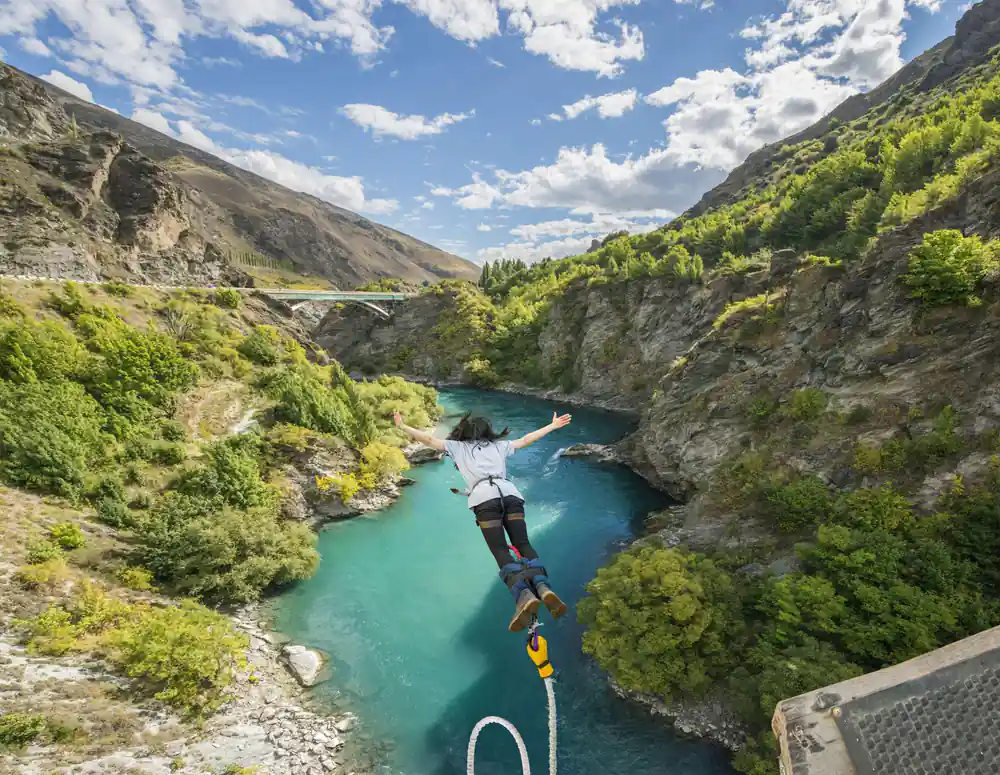
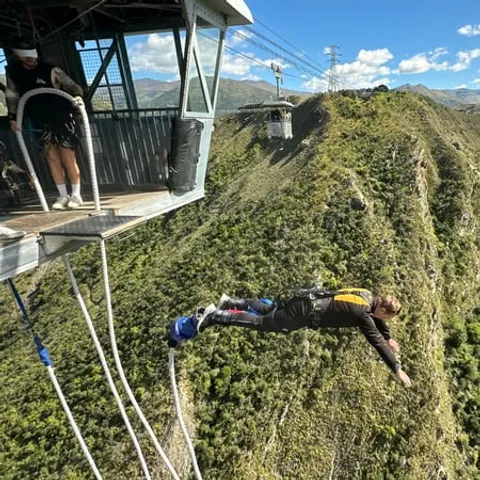
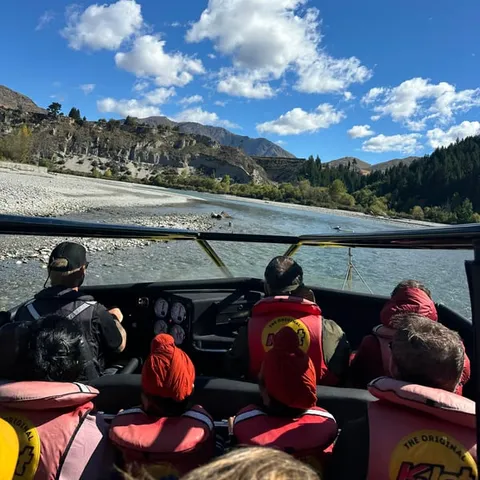
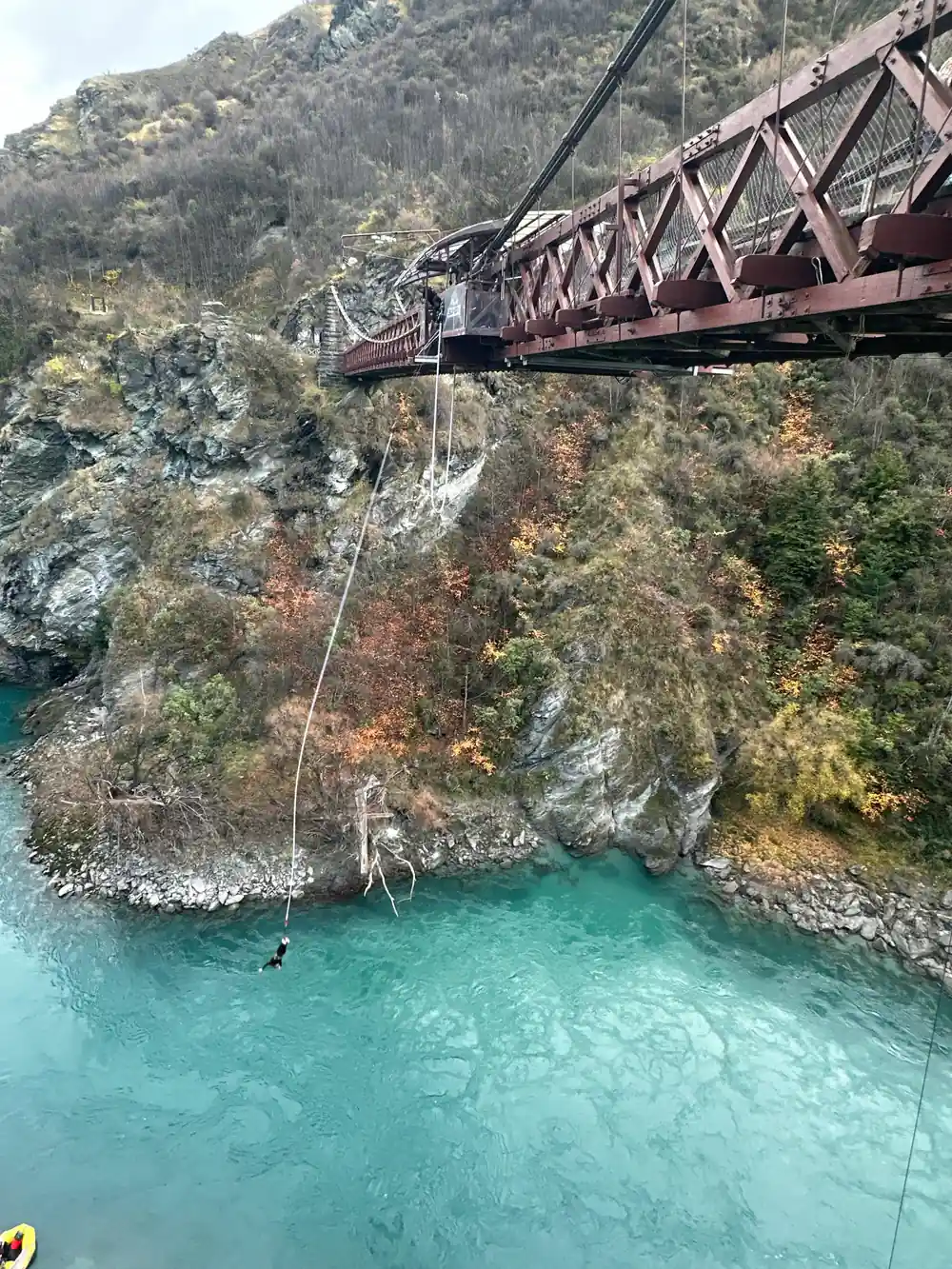
On 12 April 1988, AJ Hackett and Henry van Asch stood on the Kawarau Bridge in the Gibbston Valley and launched the world's first commercial bungy jump. The historic 1880s suspension bridge over the Kawarau River, 43 metres above the water, is still home to the original jump today.
Is the jump photo package worth it?
Before you jump
- Reserve a slot for the Kawarau Bridge Bungy and check the start times for your date.
- Allow 1 to 2.5 hours for the Kawarau Bridge Bungy listing.[4]
- Dress for wind on the bridge deck and a cooler breeze down in the gorge.
- Ask the crew about harness fit, loose items and anything that needs storing before you jump.
Cameras and kit
- Hand your phone to a friend on the bridge if you want photos from the side.
- In a group, one person can film from the bank while another shoots the deck.
- Jump prices start from US$188 for the Kawarau Bridge Bungy listing.[4]
- Compare the cost of the operator's photos with the jump itself before you decide.
What a filmed bungy jump looks like
A bungy jump is a short story told in three beats: the shuffle to the edge of the platform, the drop, and the rebound as the cord loads and lifts you again. On the Kawarau Bridge those beats play out over a river and a stone gorge that has drawn cameras since long before anyone thought of jumping off the bridge. The site is 43 metres above the water, and the world's first commercial bungy jump was launched there on 12 April 1988.[1]
Free fall lasts about 5 seconds and reaches about 70 km/h.[2] Blink and it is done. A bungy jumping Queenstown video holds the parts your memory edits out: the countdown, your face at the edge, the moment the cord takes your weight and the ground stops coming. That is the case for having someone else hold the camera.
Ask at check-in what is being filmed on your jump and where the cameras point, so you know what you are buying before you step onto the platform. It also helps to know which angle you want. A wide shot of the whole fall, a tight shot of your face on the platform, or the walk back to the bridge with your legs still shaking are three very different souvenirs.
Where the cameras are on the day
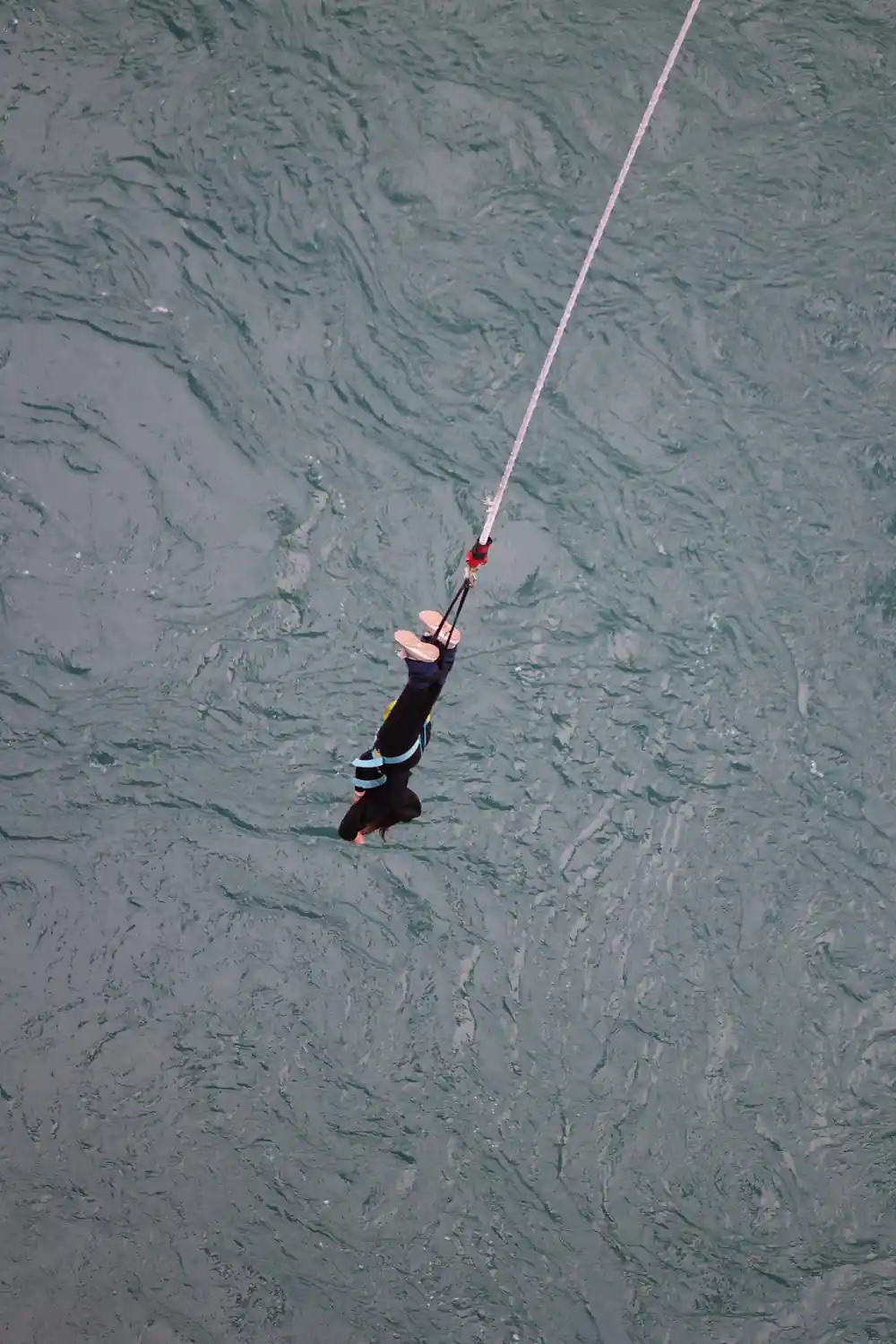
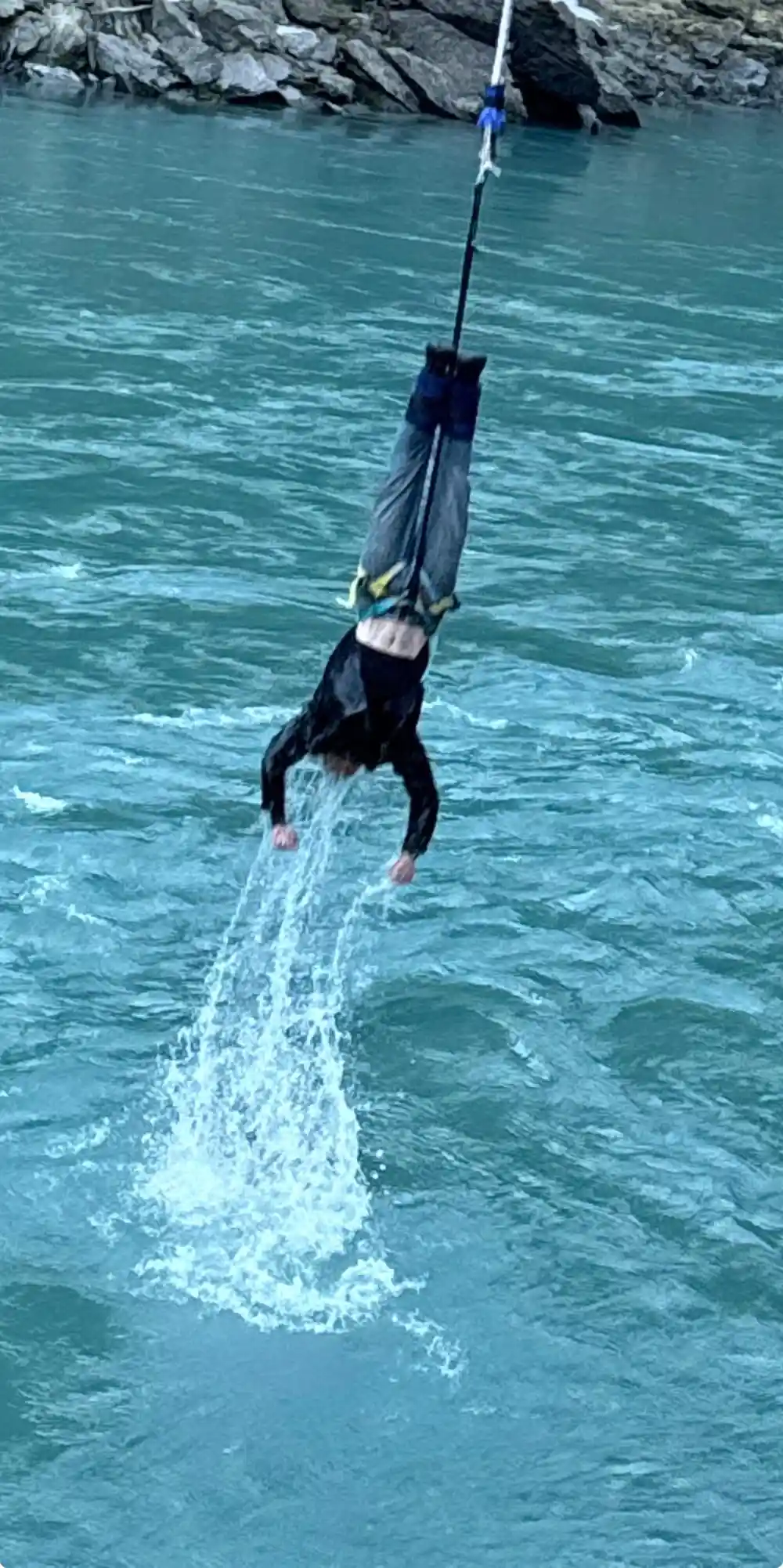
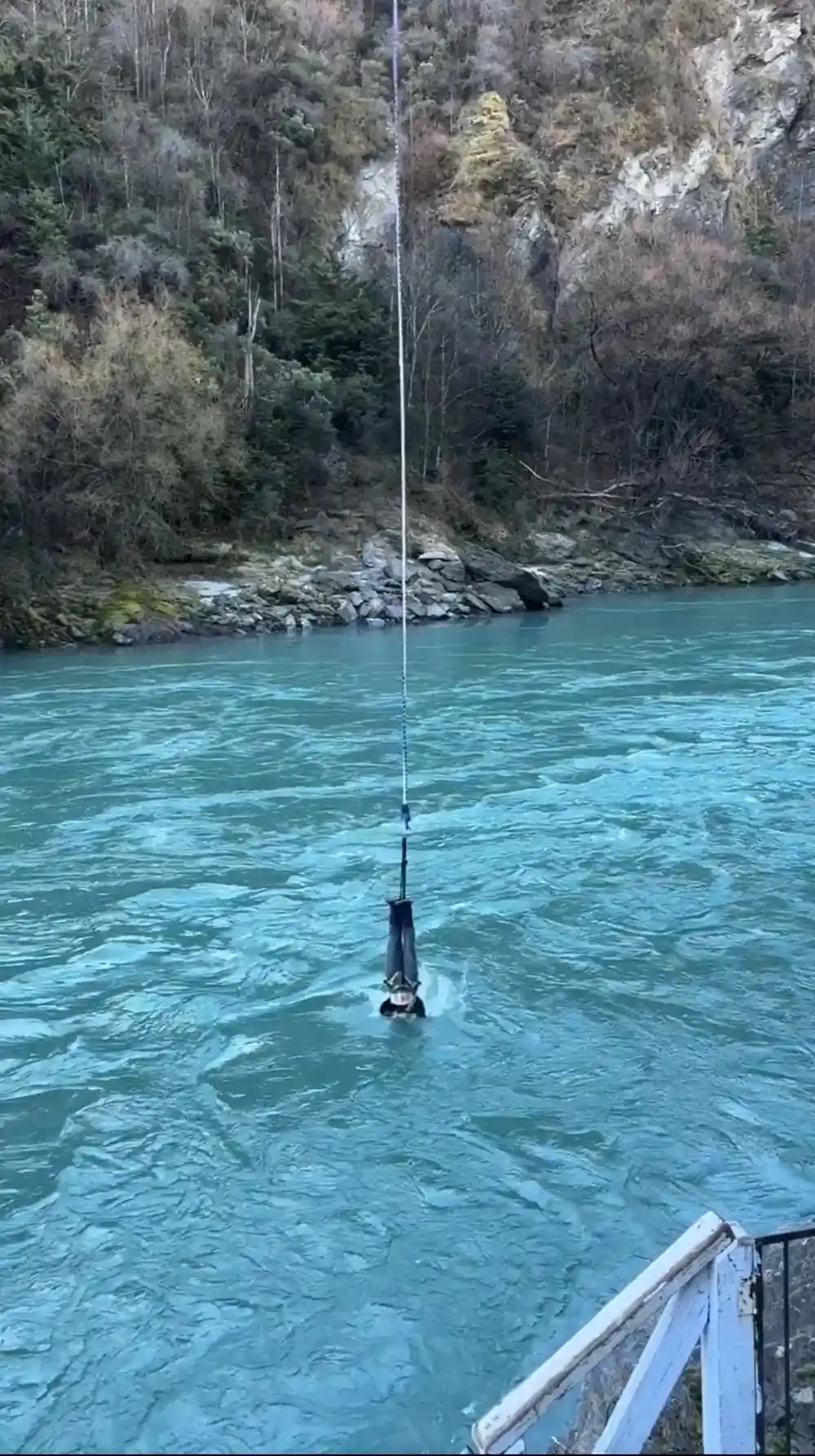
Jump crews film from a few set positions, and each one gives a different picture. The platform itself gives a close, straight-down view of the countdown and the launch. The bridge deck and walkway give a side-on view of the fall with the gorge behind it. A lower position near the water catches the last part of the drop, with the cord stretching down towards the river.
Setup changes with the weather, the river level and the crew on the day, so the useful move is to ask at the desk where the cameras are working and what the finished clip covers. If you want a particular angle, say so early. Requests are much easier to sort out before your name is called than halfway through the safety briefing.
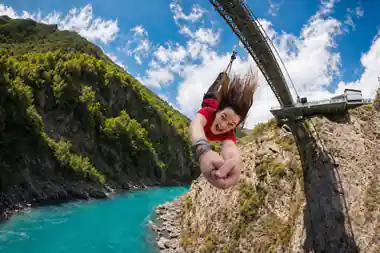
If you are the one holding a camera, the bridge area is where the classic Kawarau Gorge suspension bridge photos come from: the span, the pale rock walls and the water below in one frame. Wait for a jumper to reach the low point of the bounce, then shoot wide. The turquoise water does the rest.
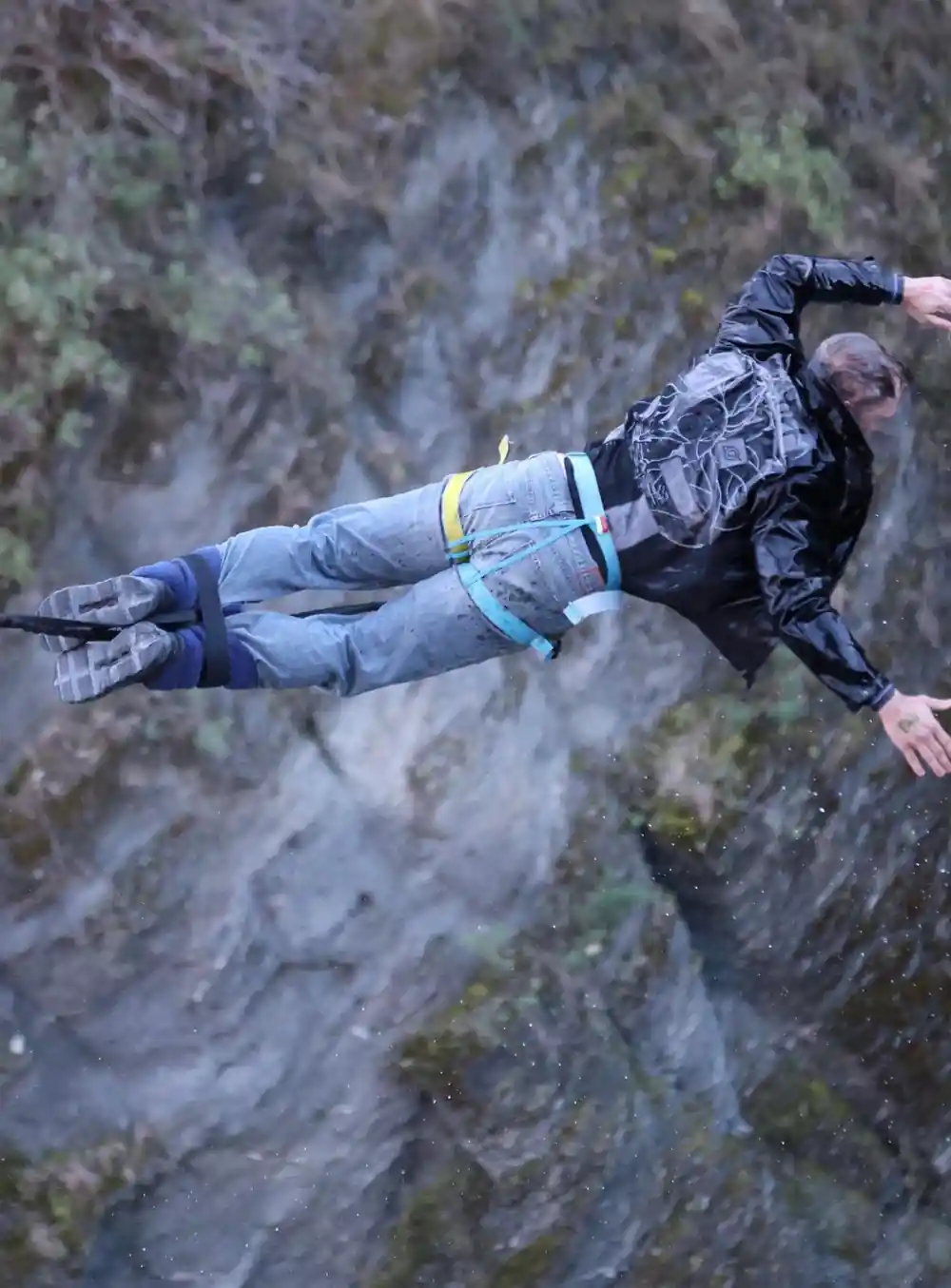
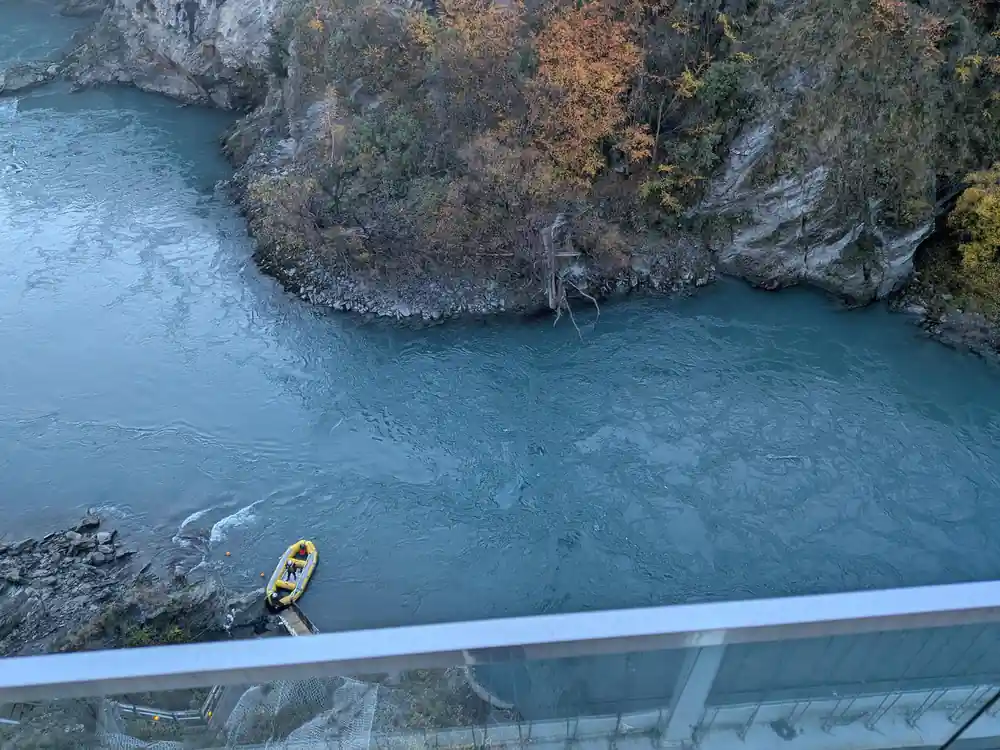
The bridge deck, the gorge and the river below, seen from the jump platform.
Why your own camera is best left behind
Anything loose on the platform becomes a falling object. A phone in a pocket, a lens cap in a hand, a hat on a head: all of it has a long way to go before it reaches the Kawarau River, and nothing that goes over the edge is coming back. The wind on the bridge does not help either, and it arrives without warning.
Phones are also a distraction at exactly the wrong moment. The harness, the countdown and the step off the edge want both hands and a clear head, and a screen in your face almost never improves the picture. Hand your phone to a friend on the bridge and let them worry about framing.
Ask the crew what you may carry onto the platform that day, and leave the rest in a bag or with your group. A jacket with a zip, pockets emptied and nothing dangling from your wrists keeps the whole thing simple, and it keeps the crew's attention on you rather than on your belongings.
Arms, hands and the shape you make
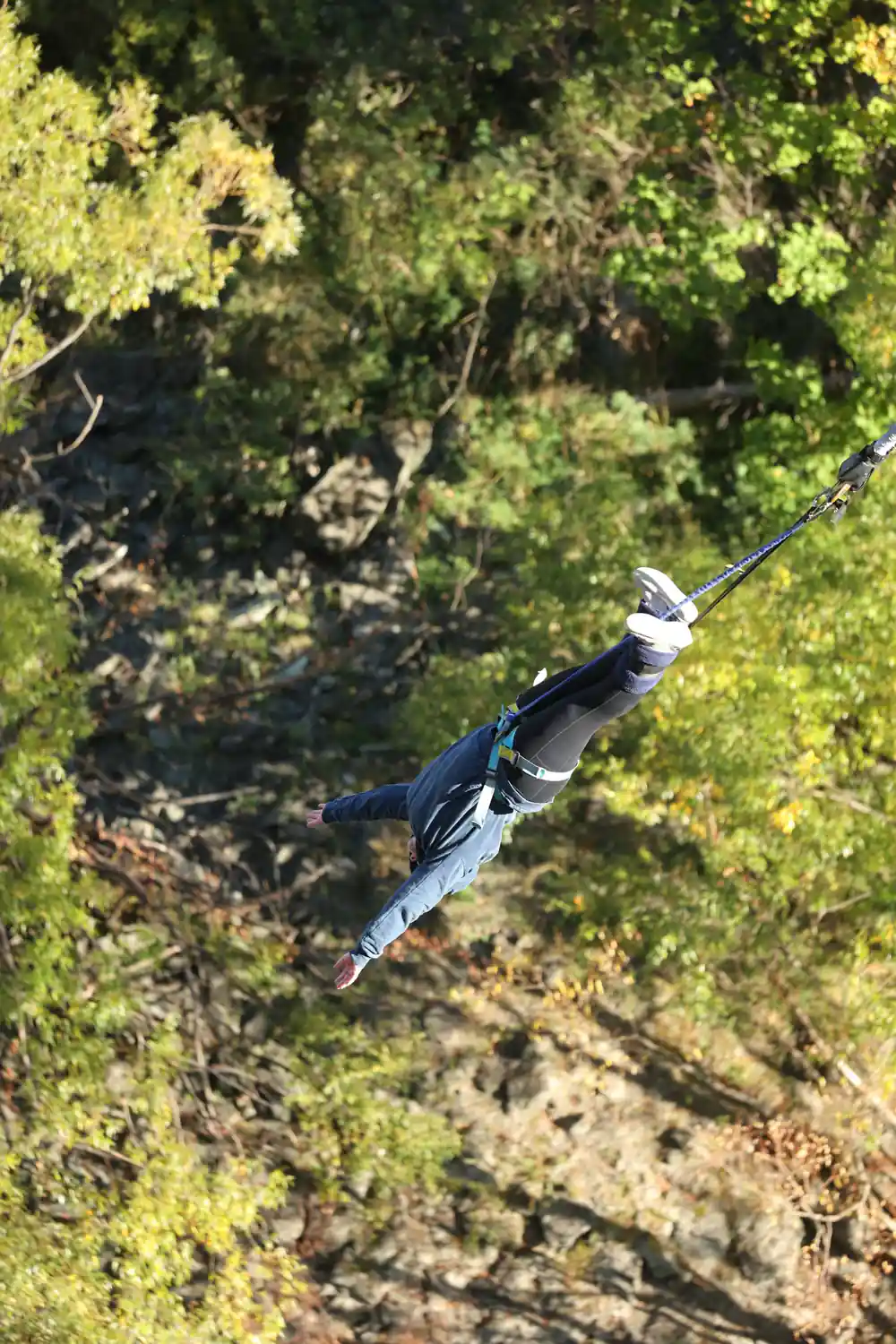
The way you hold your arms changes the whole look of the photo. A jumper stretched out horizontally against the canyon reads as calm, wide and weightless. A jumper curled around the harness reads as tight, fast and a little bit wild. Both work; they just tell different stories about the same few seconds.
Ask the crew what they suggest for the shot you want. If you would rather look out at the gorge than at the lens, say so before the countdown starts. The platform is busy, and there is not much time for a discussion at the edge.
Faces are the hard part. Wind makes eyes stream, and a wide grin beats a careful pose every time. If you want one clean frame, look straight at the camera on the count, then let your head go where the jump takes it.
from US$188
The Kawarau Bridge Bungy listing starts from US$188 and runs 1 to 2.5 hours, rated 4.90 from 195 reviews.[4]
The swallow dive, and stepping off instead
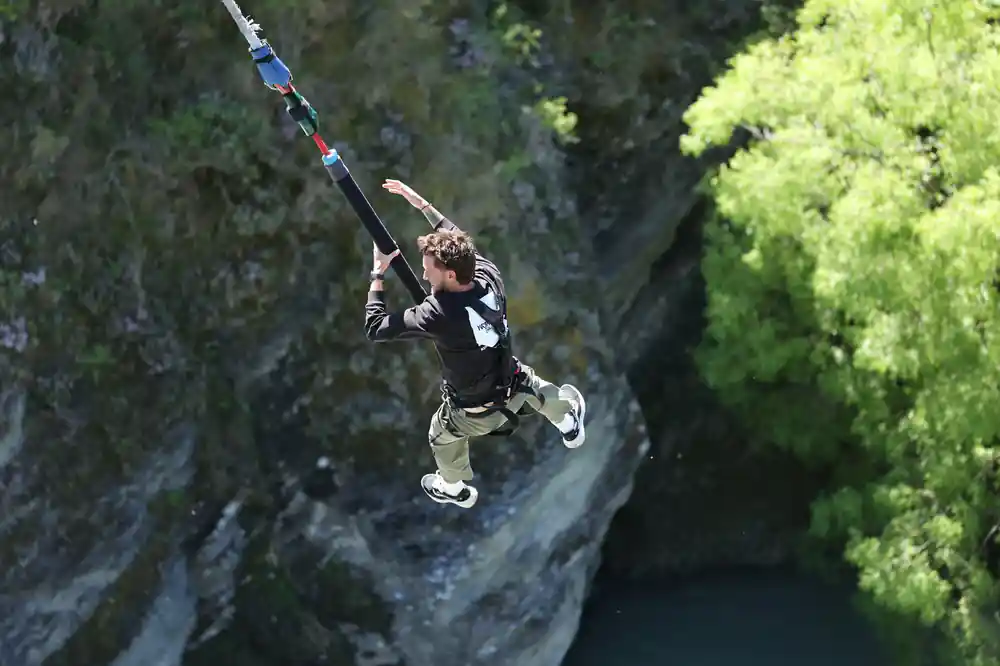
Some jumpers launch outward with both arms forward, a shape sometimes called a swallow dive. Others step off the edge as if they were getting out of a boat. Both end the same way, with the cord catching you above the river and the bridge suddenly very far above your head.
Which one you get depends on the platform, the harness and the day, so ask before you commit to a style. If a dive is not on the cards, a big step out with your arms open still gives a strong frame on the way down, and it feels more deliberate than a gentle topple.
The countdown is yours to shape. Tell the crew if you would rather have a slow count or a fast one, and take the second you need at the edge. Nobody is timing you, and the cameras are rolling either way.
Getting your files after the jump
Photos and clips usually reach jumpers as a download link or an email, sometimes the same day and sometimes later once the files have been sorted. Ask at check-in how yours will arrive, and give an address you can actually open on your phone.
Check the clip before you leave the site if you can. If the camera missed the first second of the fall, or the angle is not the one you hoped for, it is far easier to sort out on the spot than from another country a week later.
Save the files somewhere sensible the same evening, and back them up before you fly home. A bungy jump Queenstown video that ends up lost in a crowded inbox is the same as no video at all, and the jump is the part of the trip you will want to show people.
Is the photo package worth the money?
The jump itself is the bigger line on the bill. The Kawarau Bridge Bungy listing starts from US$188, runs 1 to 2.5 hours and carries a 4.90 rating from 195 reviews.[4] Add the media on top and you are paying for a record of something you will talk about for years.
Compare what the same budget buys elsewhere. The Kawarau Zipride listing starts from US$29, the Nevis Canyon Swing from US$191 and the Shotover and Kawarau jet boat ride from US$87.[6][7][8] Spread across a group, the jump footage is often the cheapest souvenir of the day.
If you are jumping once on this trip, the files are the part that survives the day. If you are jumping with friends and one of you stays on the bridge, you already have the wide angle covered for nothing.
Queenstown bungy heights above the water
Heights above the water for the Kawarau Bridge site[1] and for the AJ Hackett Nevis and Ledge sites in the Queenstown area[9].
From-prices for jumps and rides near Queenstown
All amounts are US dollar from-prices on GetYourGuide listings: Kawarau Bridge Bungy[4], Nevis Bungy[5], Nevis Canyon Swing[8], jet boat[6] and Kawarau Zipride[7].
When to jump and when to shoot
Framing your jump
Book a start time
Pick a slot for the day you want and check the listing for the start times available on your date.
Check in and get kitted
Sign in, get weighed, meet the crew and ask what photos and video are running on your jump.
Watch a few jumps
Stand where the crew point you and watch other people go before you; it shows you how the harness moves at the edge.
Take your turn
Step onto the platform, get clipped in, and let the crew know if you want a slow count or a fast one.
Sort your files
Ask where and when your photos and clip will be ready, and save them somewhere safe before you leave the valley.
Book the Kawarau Bridge Bungy and plan your jump photos
from US$189Reserve now & pay later