In a nutshell
- From Queenstown, the Kawarau Bridge Bungy Centre is around a 25-minute drive (23 km) via State Highway 6, so treat the gorge road as part of the day out.[1]
- Kawarau Bridge sits 43 metres above the water, and the world's first commercial bungy jump was launched there on 12 April 1988.[2]
- At AJ Hackett, the minimum age to bungy jump is 10 years old, the minimum weight is 35kg, and the maximum weight is 235kg.[3]
- The listing gives a duration of 1 to 2.5 hours, with a small group limited to 6 participants and an English-speaking instructor.[4]
- From US$188, rated 4.90 from 195 reviews. Reserve now and pay later, with free cancellation up to 24 hours in advance for a full refund.[4]
- Top choice Kawarau Bridge Bungy from US$188 Duration1 to 2.5 hours[4]Rating4.90 from 195 reviews[4]Group sizeLimited to 6 participants[4]CancellationFree cancellation, 24 hours ahead[4] Check availability
- Nevis Bungy from US$232 Duration4 hours[5]Rating4.96 from 100 reviews[5]Group sizeLimited to 6 participants[5]CancellationFree cancellation, 24 hours ahead[5] See this tour
- Nevis Canyon Swing from US$191 Duration4 hours[6]Rating4.86 from 144 reviews[6]Group sizeLimited to 8 participants[6]CancellationFree cancellation, 24 hours ahead[6] See this tour
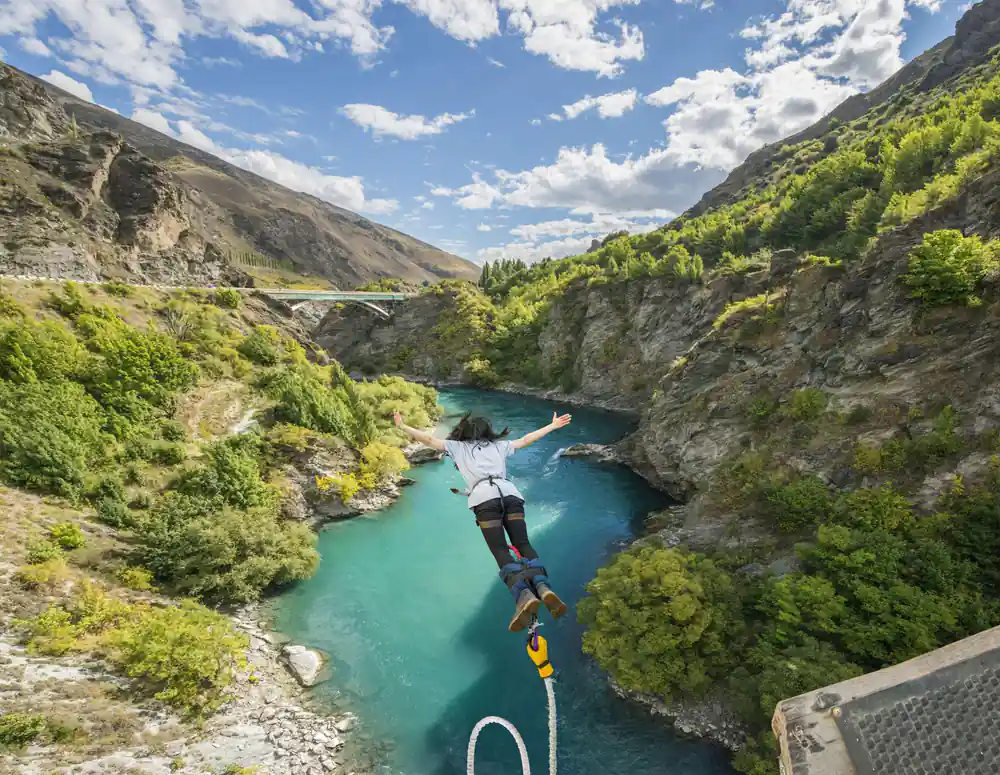
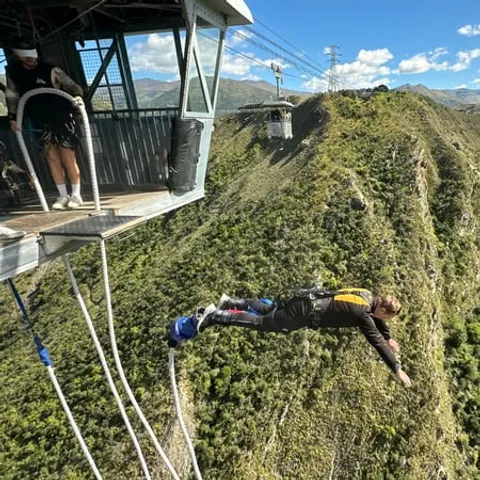
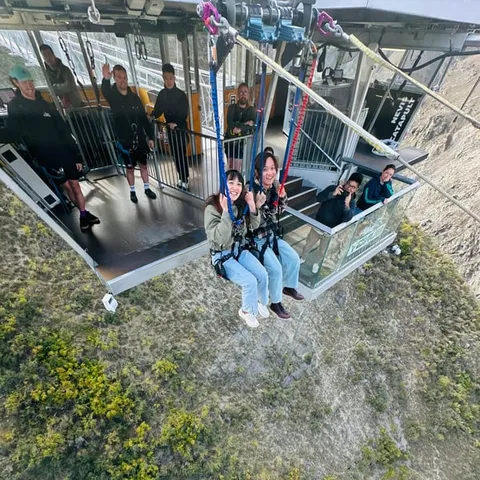
In New Zealand, bungy operators are required to be registered under the Health and Safety at Work (Adventure Activities) Regulations 2016 and must periodically pass independent safety audits.
Our verdict on the Kawarau Bridge day
Pre-departure
Arriving at the Kawarau Bridge Bungy Centre
The drive out from Queenstown is part of the day. From Queenstown, the Kawarau Bridge Bungy Centre is around a 25-minute drive (23 km) via State Highway 6.[1] The road climbs away from the lake, crosses open country, then drops into the Kawarau Gorge, where the river runs between rock walls and rows of vines. The historic suspension bridge shows up below the road before you reach the turnoff, and the first sight of it, small and low over the green water, is usually when the nerves start.
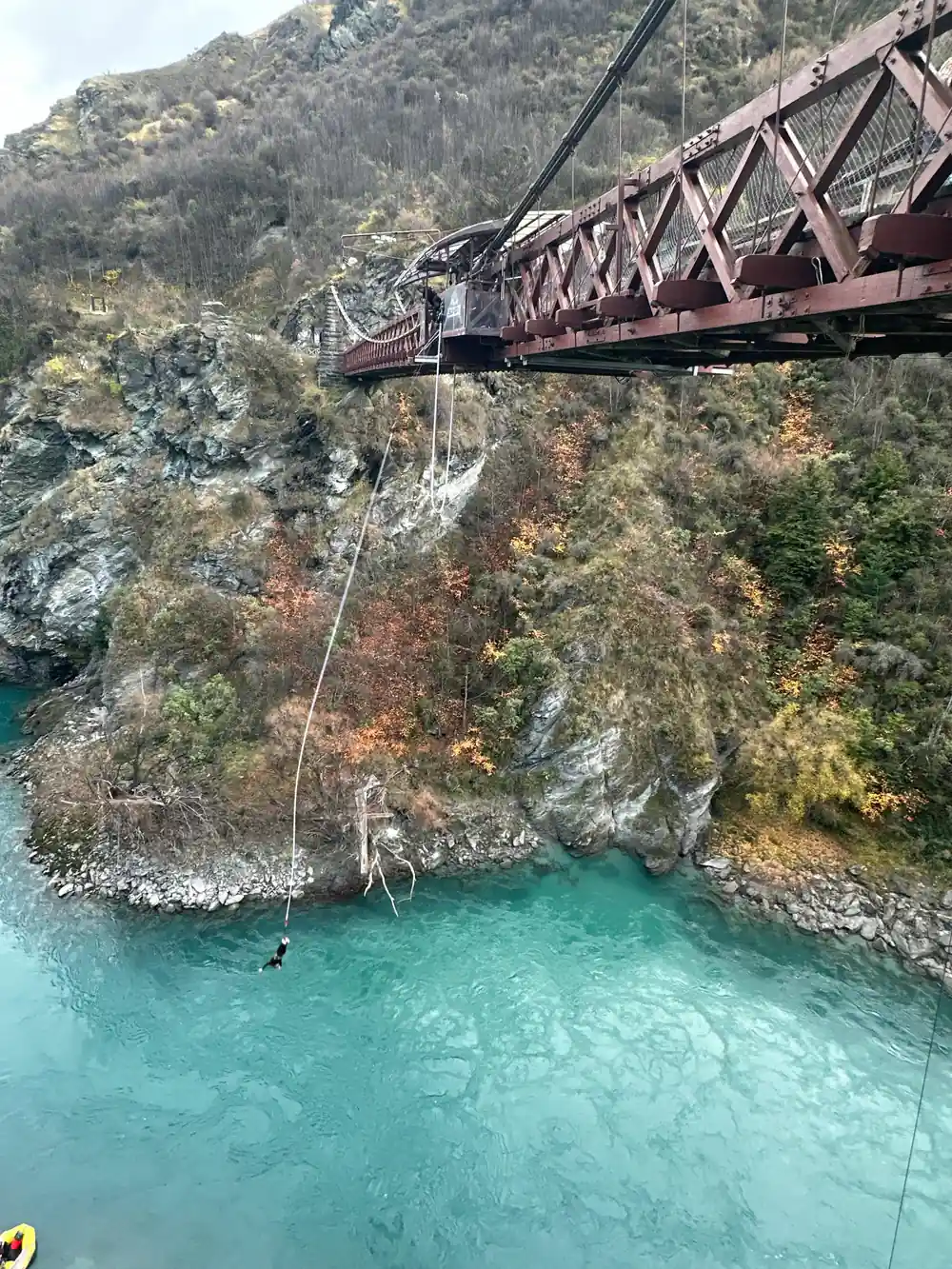
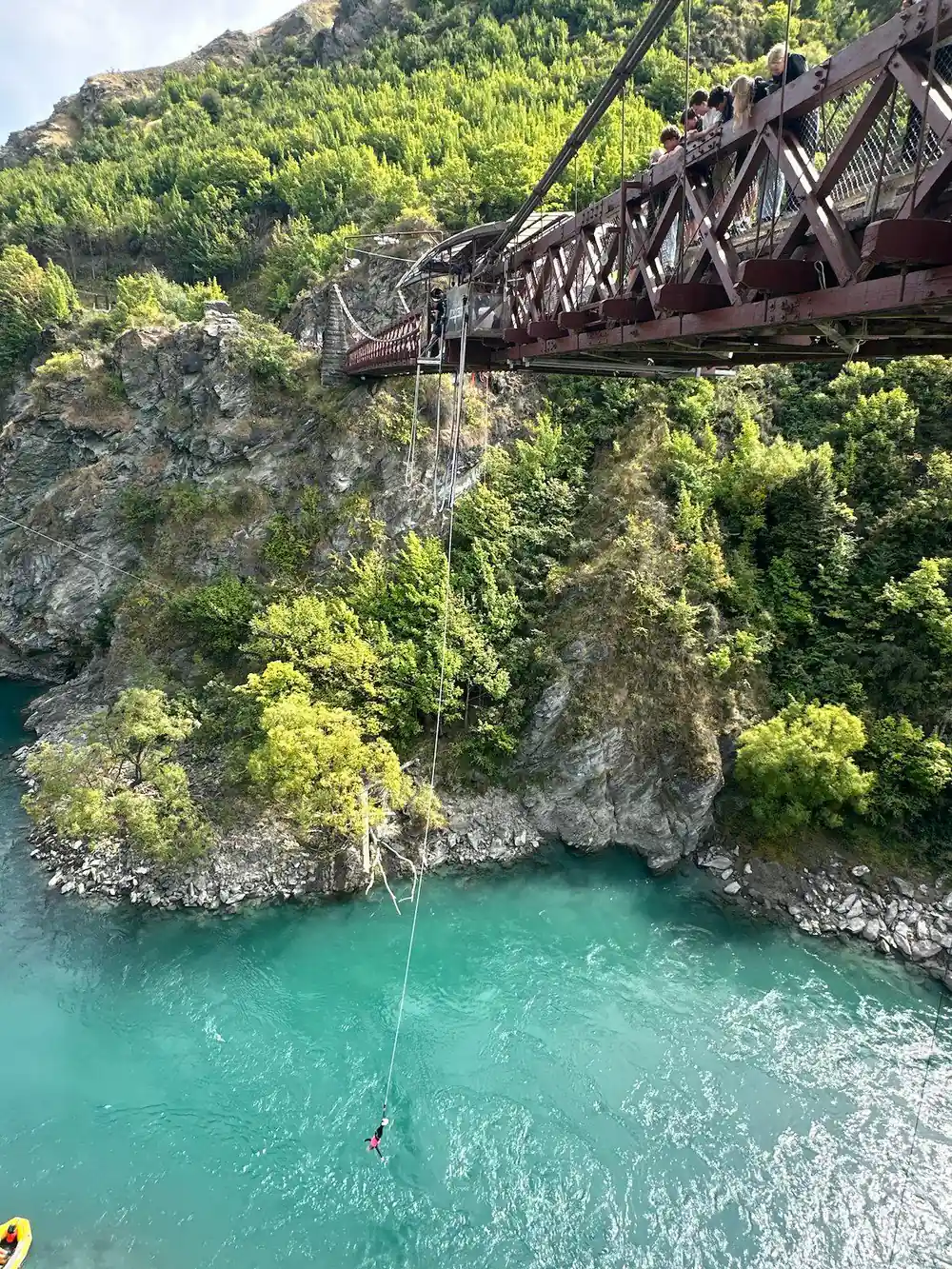
The gorge has a history of firsts. Gold was first discovered in the Kawarau Gorge in the early 1860s, sparking a rush that transformed Central Otago.[8] The world's first commercial bungy jump was launched from the bridge over the same river on 12 April 1988.[2] The bridge itself is a historic 1880s suspension bridge, and it sits 43 metres above the water.[2] Standing on the deck, looking down at the river, it is easy to see why this spot was chosen for it.
The booking side is simple. This listing is from US$188, rated 4.90 from 195 reviews.[4] It is a small group, limited to 6 participants, with an instructor who speaks English, and the experience has a duration of 1 to 2.5 hours.[4] You can reserve now and pay later, and free cancellation applies up to 24 hours in advance for a full refund.[4]
The kit, the checks and the harness
Before anyone gets near the edge, the numbers matter more than the nerves. At AJ Hackett, the minimum age to bungy jump is 10 years old, the minimum weight is 35kg, and the maximum weight is 235kg.[3] If you are booking for a group, work out who qualifies before you pay. The car park is a bad place to discover that somebody in the party does not meet the limits.
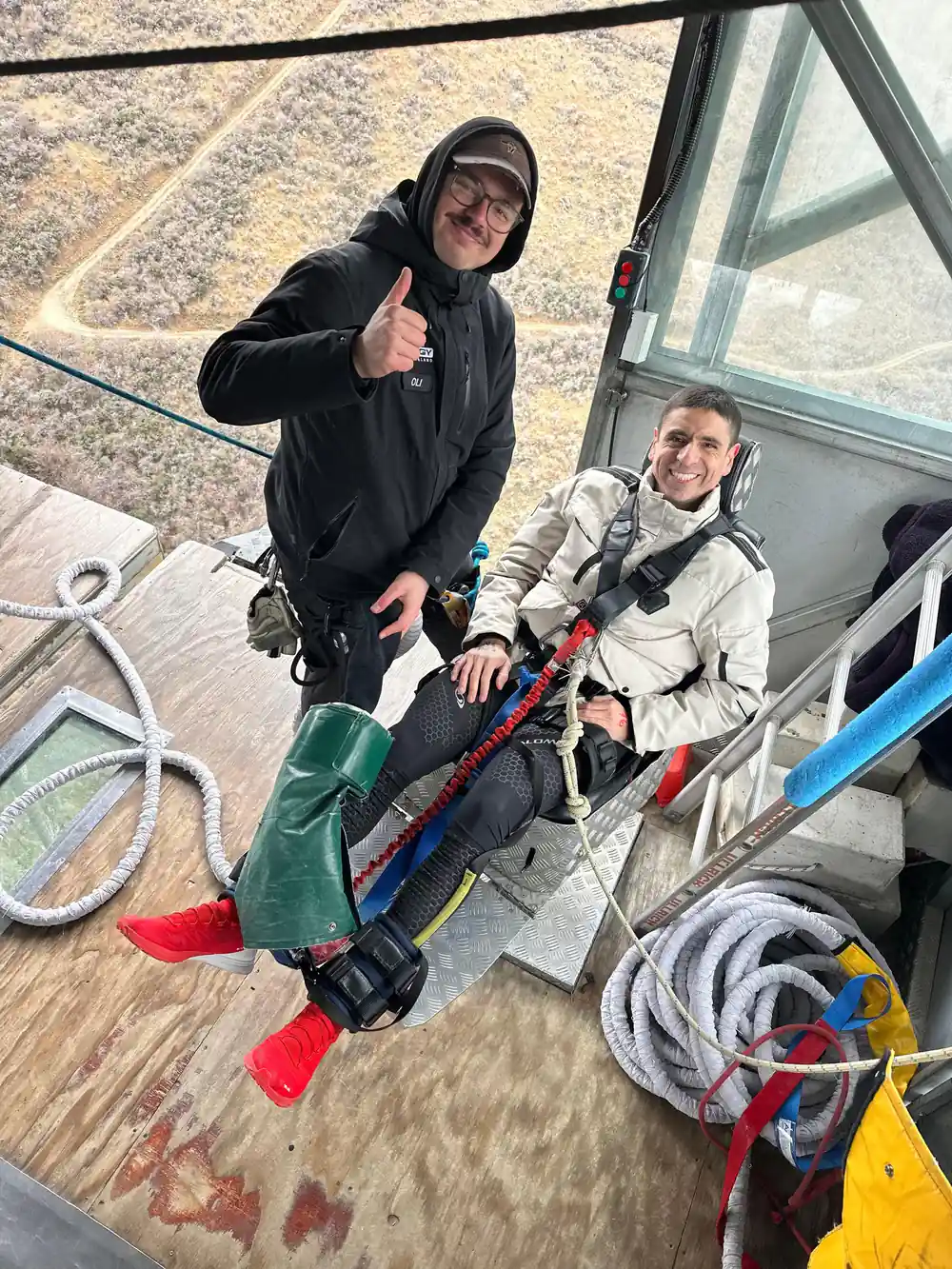
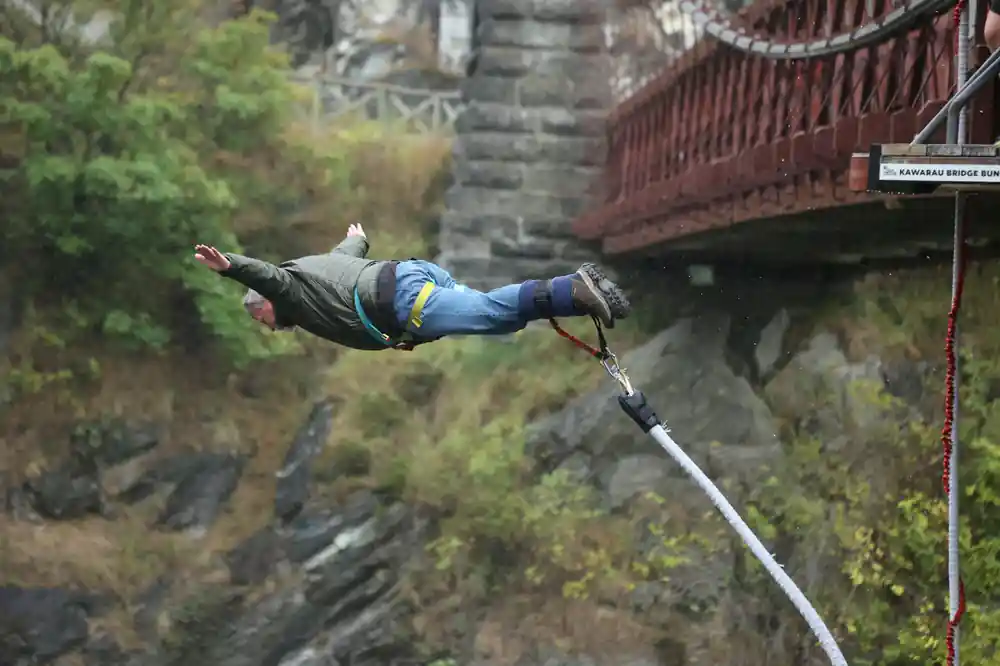
The harness is the part people remember afterwards. Padded straps are wrapped around both ankles, with a second strap as a backup, and a cord runs from the harness to the jump point. It looks impossibly thin for the job it has to do. The crew check the fit, the buckles and the cord while you stand on the deck trying to look calmer than you feel.
Safety is not left to individual operators here. In New Zealand, bungy operators are required to be registered under the Health and Safety at Work (Adventure Activities) Regulations 2016 and must periodically pass independent safety audits.[7] That is the framework behind the harness checks, the briefing and the final look at the platform edge. Ask anything you want while you are being kitted up.
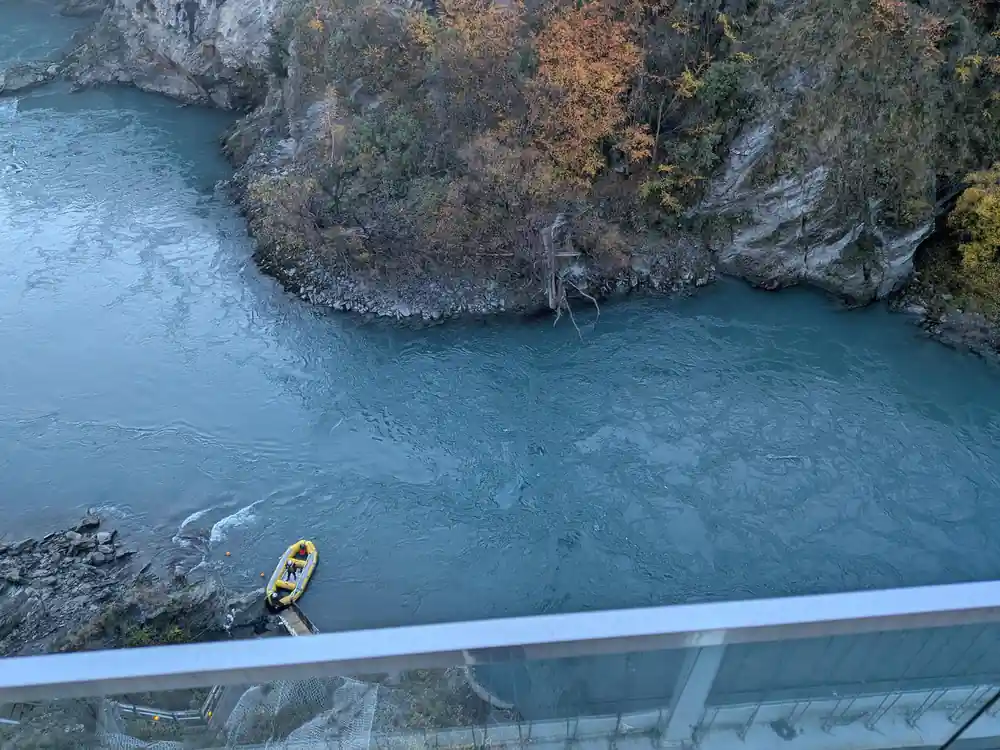
The deck at Kawarau Bridge, where the crowd watches each jumper step off.
The walk out onto the bridge
You cross the bridge on foot, and the crowd comes with you. Spectators line the deck and the viewing platforms, cameras up, waiting for the next person to step off the jump point. The jumping area itself is sectioned off at the middle of the span, where the crew work in a small space with the cord coiled at their feet. The walk is short, and it feels much longer than it is.
From the deck, the river is a long way down. The bungy site is 43 metres above the water[2], and the Kawarau is a much deeper and bigger river, flowing through Central Otago vineyards.[9] On a still day you can hear it working over the rocks below. On a windy day you mostly hear the bridge, the straps and the people on it.
Timing on the day is loose rather than exact. The tour listing gives a duration of 1 to 2.5 hours.[4] For a sense of how many people move through this region, Queenstown welcomed 412,897 international visitors in 2024.[10] Book a slot rather than turning up and hoping, and keep the rest of the day flexible. A cafe, a viewing deck and the river are all there while you wait.
At the edge, and the countdown
The moment you step onto the jump platform, the noise drops away. The crew take you through the last check, position your feet so that your toes clear the edge, and tell you what they are going to say and when. People laugh, then stop laughing. The person ahead of you jumps first, and you hear the crowd more than you see it. Then the count begins, and the deck, the crew and the bridge all fall out of the picture.
Looking down, you see green water, the rock walls of the gorge and small figures of the watchers on the banks. Looking up, you see cables, sky and the hills on the far side of the river. This is the point where the height stops being a number and turns into a place you are about to leave.
For scale, the Kawarau site is 43 metres above the water.[2] In the same area, the Ledge site is 47m and the Nevis site is 134m.[11] Whatever you do here, the first step is the one that decides the rest of it, and it takes about as long as a breath.
43 m
Kawarau Bridge sits 43 metres above the water, and the world's first commercial bungy jump was launched there on 12 April 1988.[2]
The jump and the retrieval
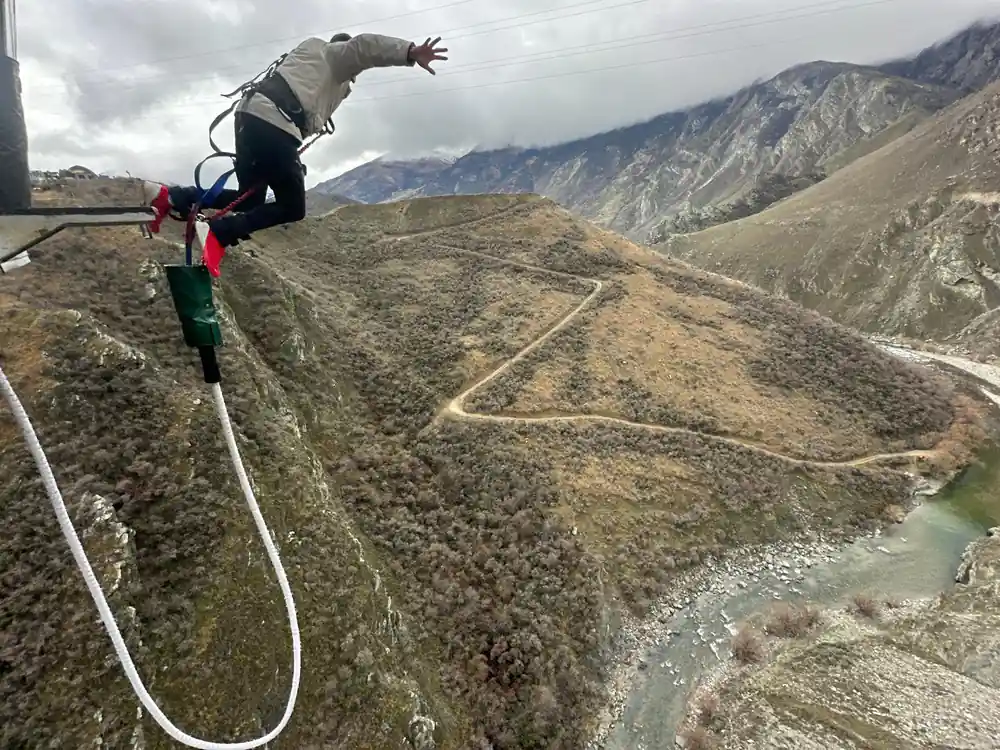
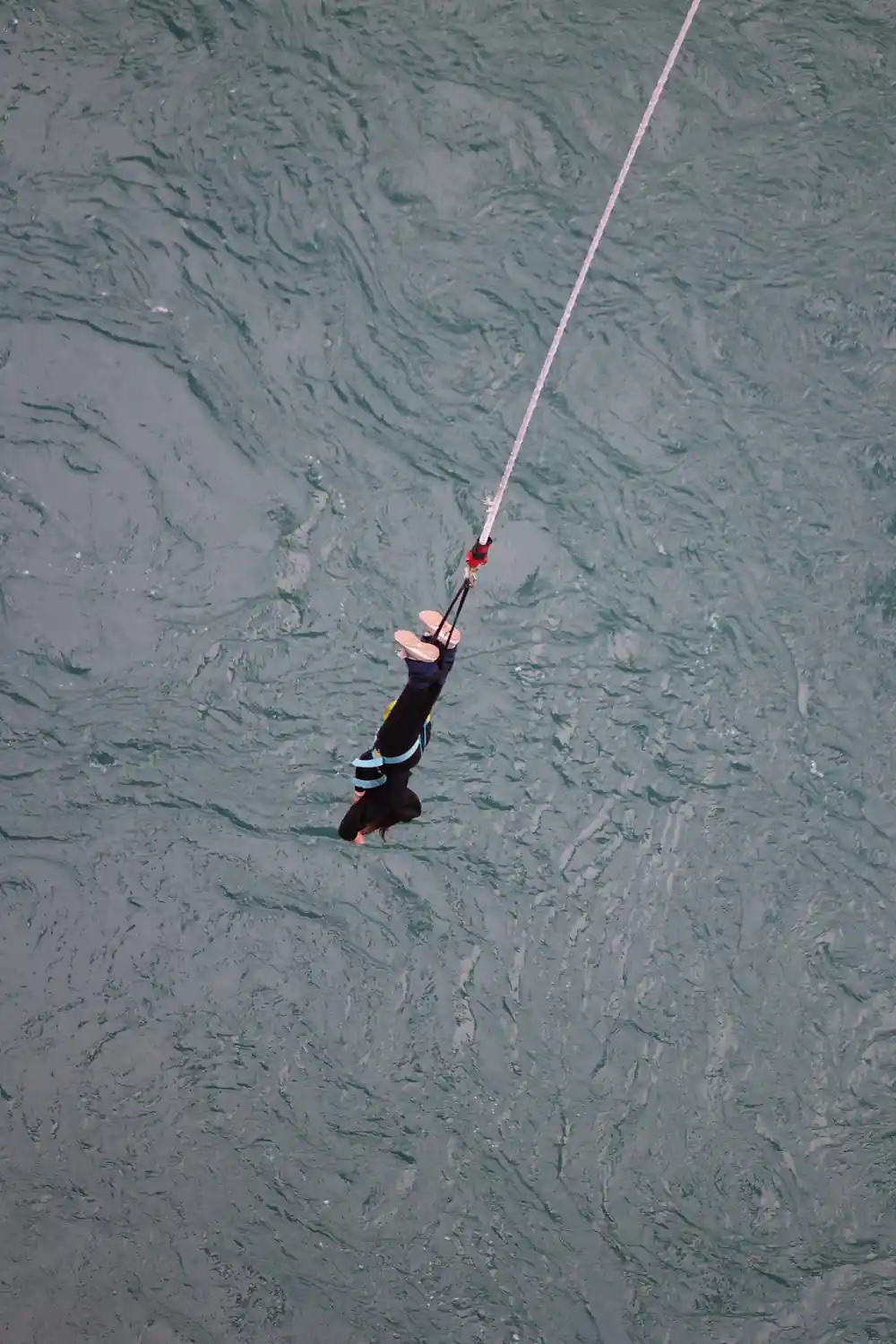
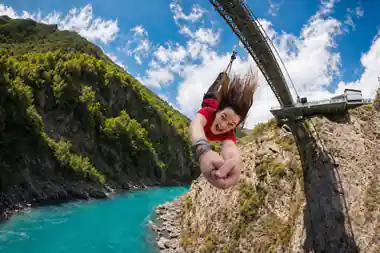
The fall is short and the bounce is longer than you expect. Wind, river, sky and bridge swing through the frame in no particular order, the cord stretches, and then you are hanging, turning slowly, with the water below and the deck above. Some people shout the whole way down. Others go completely quiet until they are back on the platform.
The retrieval is quick and slightly undignified. The crew lower a line or come down to you, depending on where you stopped, and you are brought back to the bridge, unhooked and pointed towards the exit. Your legs will feel like they belong to someone else for a minute or two, and that is entirely normal.
There is a long history under this deck. By 1994, 100,000 jumps had been completed at Kawarau Bridge.[12] The site is still the home of the original jump today.[2] The bridge has been carrying traffic, walkers and jumpers for well over a century, and the paintwork shows it.
Afterwards at the Bungy Centre
The comedown happens on the viewing deck. People drink something hot, compare phone footage, and watch the next jumper step out while their own legs settle. Photos and video are the usual souvenir, and it is worth looking at them before you get back in the car, while you still remember what the fall felt like.
The valley offers more than one way to get the blood moving. The Kawarau Zipride is a 130m long zipline that reaches a highest speed of 60 km/h according to AJ Hackett's team.[13] Downriver, the Kawarau River rafting trip ends with a 400 meter long, grade 3/4 rapid.[9] The Kawarau Swing also runs from the same bridge, from US$141.[14]
Combos exist for people who cannot choose. The Kawarau Bungy & Swing Combo is from US$270 at the same site.[15] Further up the valley, the Nevis Bungy is from US$232 and the Nevis Canyon Swing is from US$191.[5][6] Getting to the Nevis platform takes a longer drive, and the canyon road is worth the trip on its own.
The ratio, stated plainly
Here is the honest arithmetic of the day. The listing gives a duration of 1 to 2.5 hours for the whole experience, and the jump itself is a few seconds of that.[4] The rest is the queue, the checks, the walk out and the wait for your turn. If you are measuring value in seconds of falling, you will always lose that calculation.
That is not a complaint. The build-up is the experience: the bridge, the crowd, the person ahead of you, the moment the crew turn and nod. This listing is a small group, limited to 6 participants.[4] Reserve now and pay later, and free cancellation applies up to 24 hours in advance for a full refund.[4]
The other half of the ratio is what you bring home. This tour is rated 4.90 from 195 reviews, with Guide at 4.9, Transportation at 4.9 and Value for money at 4.7.[4] However the numbers land for you, the day is short, the fall is shorter, and the memory has a habit of outlasting both.
Bungy heights in the Queenstown area
Kawarau Bridge stands 43 metres above the water[2]; the Ledge site is 47m and the Nevis site is 134m[11].
From-prices for a day at the bridge
From-prices in US dollars from the tour listings whose ids appear here:[4][5][6][15][16]
When to book the Kawarau Bridge bungy
On the day at Kawarau
Check in
Arrive at the centre, confirm your booking, and have the age and weight limits checked before anything else.[3]
Get harnessed
Straps go around both ankles with a backup strap, and the cord is attached while you stand on the deck.
Walk to the platform
You cross to the jump point at the middle of the bridge, past the spectators. The water sits 43 metres below.[2]
Jump
The countdown, the step off the edge, the fall and the stretch of the cord. It is over faster than the walk out.
Retrieval
The crew bring you back to the bridge and unhook you. Expect your legs to feel strange for a minute.
Afterwards
Photos, a hot drink and a look at the other rides. By 1994, 100,000 jumps had been completed here.[12]
Hold a slot on the Kawarau Bridge bungy
from US$189Reserve now & pay later